Designer and art historian working at the intersection of creative direction and generative technology. The background is in interior and furniture design, which means the instinct is always spatial: how an object sits in a room, what a material communicates before it is touched, where the eye goes first and why.
Every project in this portfolio began as an original concept. The briefs, the products, the brand identities, the visual worlds, all developed from scratch, without a client, as a demonstration of full-spectrum creative direction. Products were not generated from a single prompt: they were built through a directed process of reference, formal decision-making, and iteration, informed by years of working with objects and space.
I direct images the way a designer approaches a brief, with research, cultural reference, and intentional decision-making at every step. The same methodology applies when the brief comes from a client: the creative process starts before the first image is generated.
AI is the medium. The vision is not.
Based in Belgium. Available remote and on-site across the EU.
Fluent in English, Portuguese and Spanish.
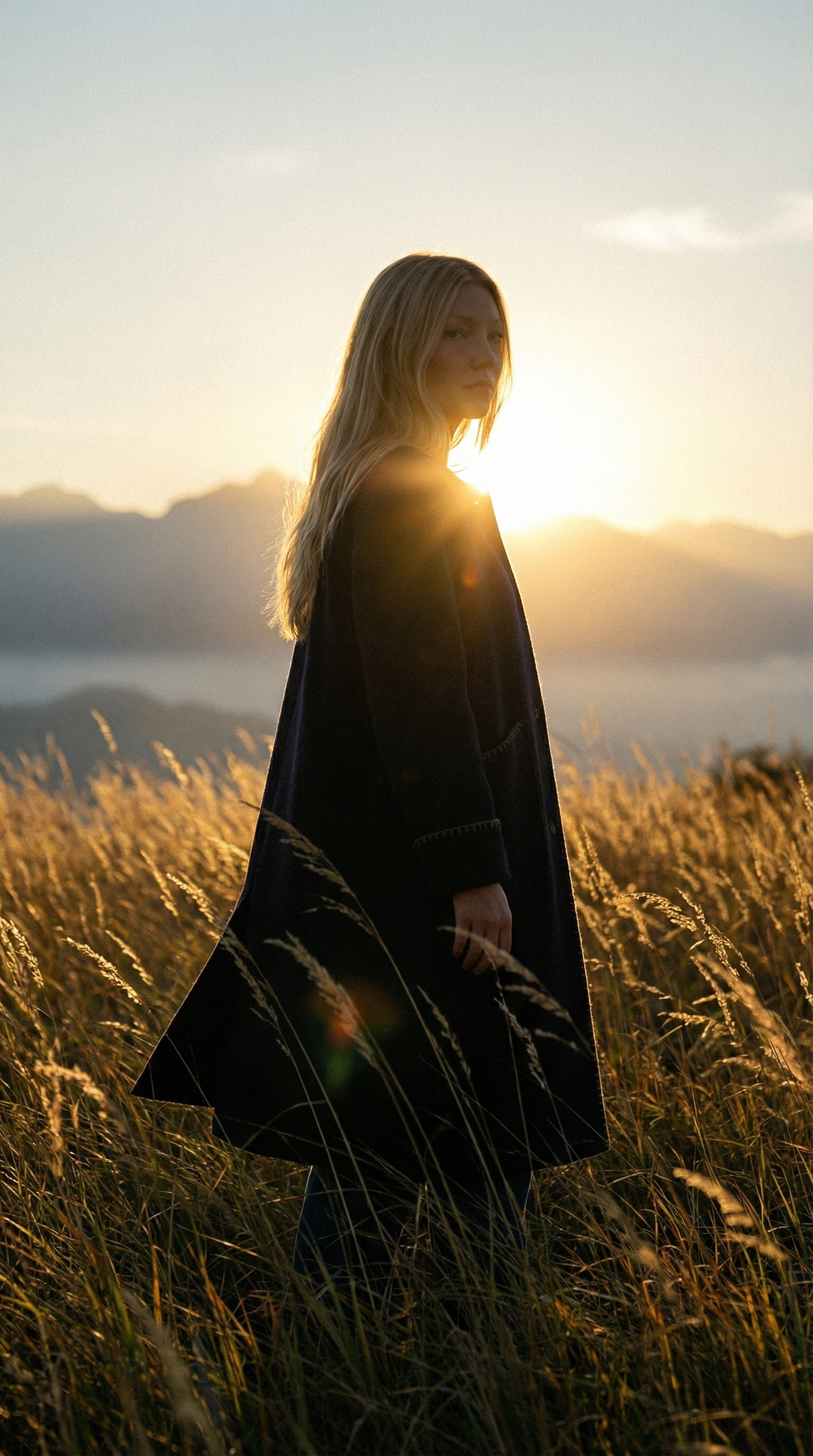
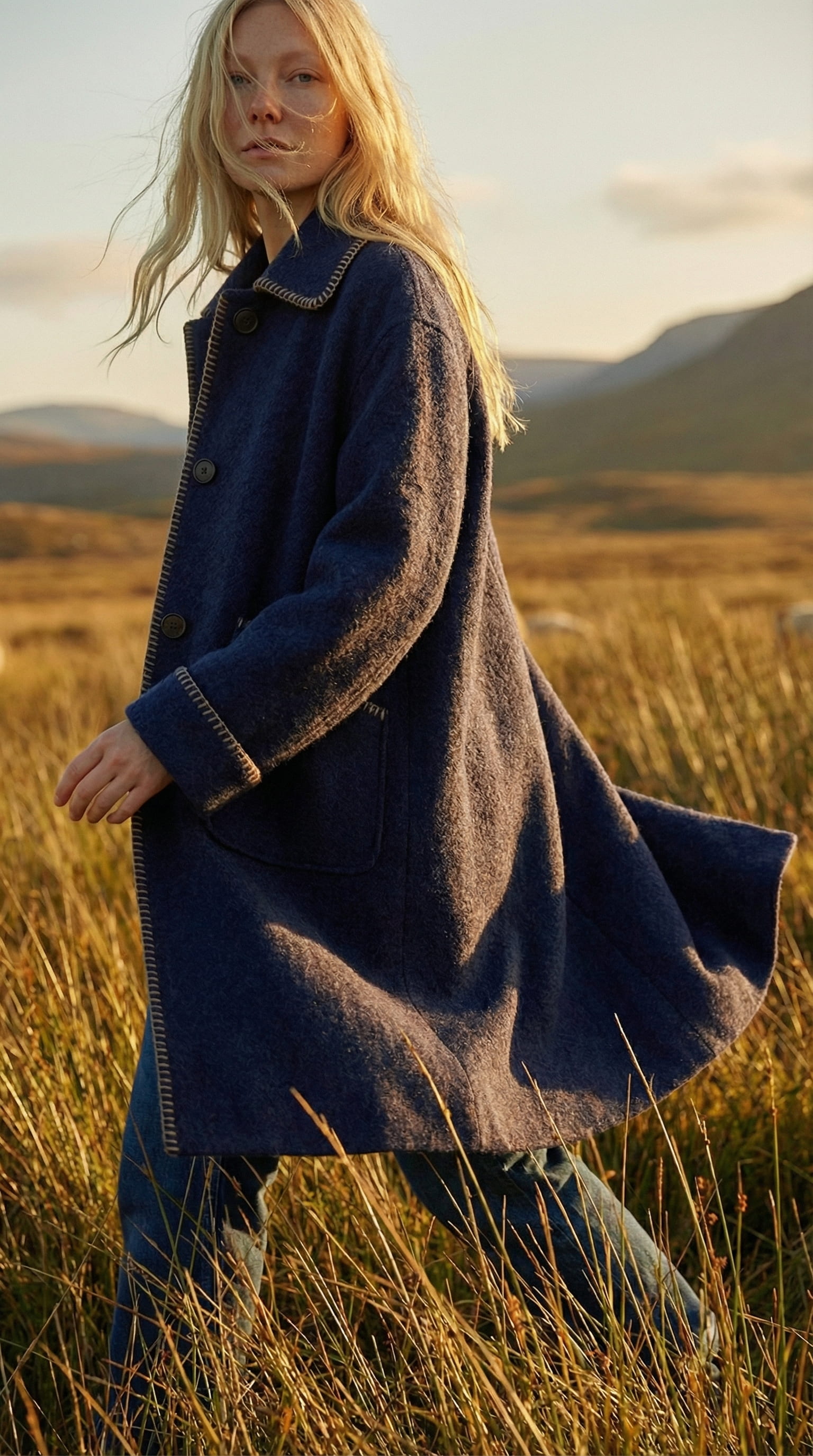
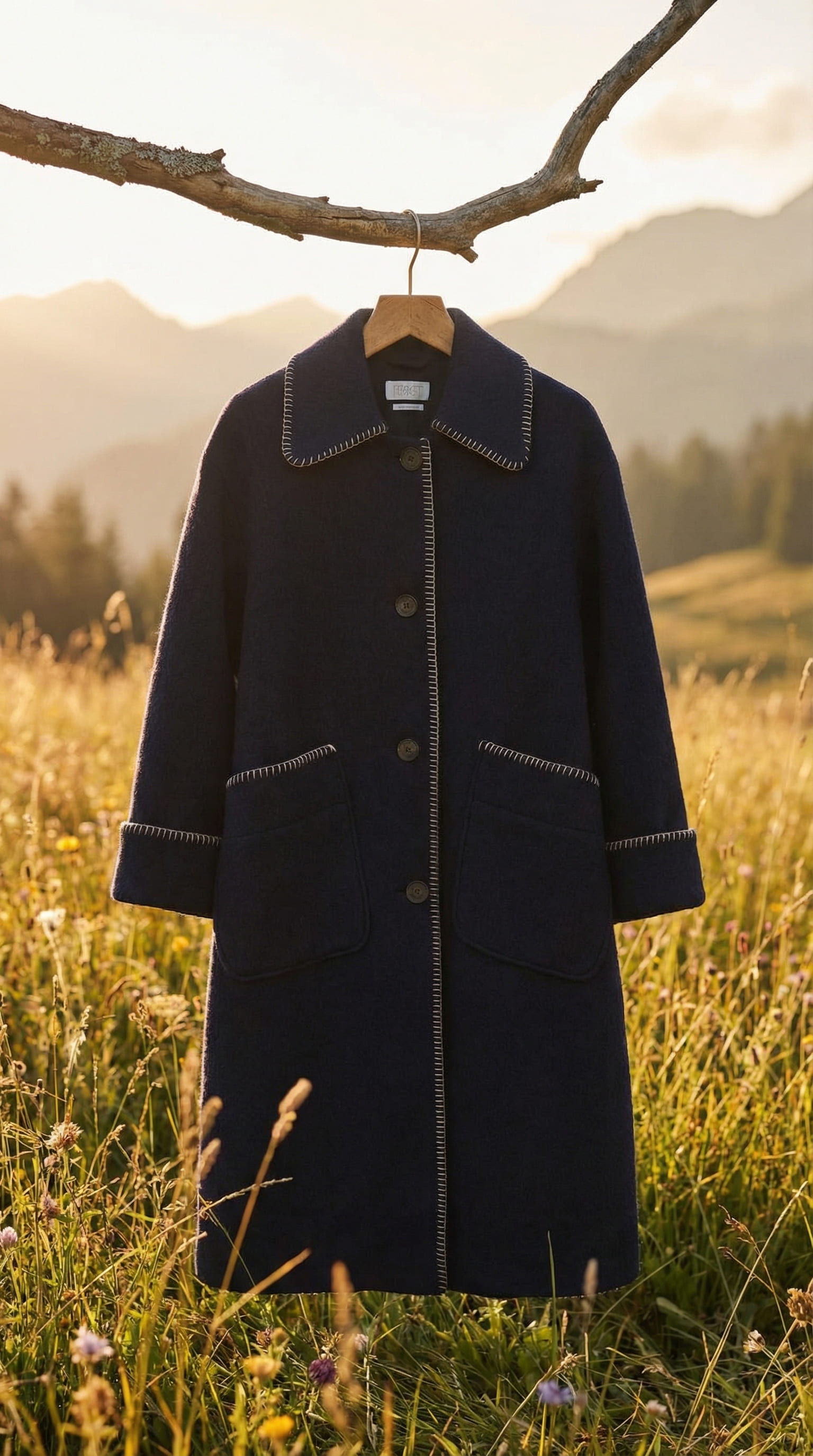
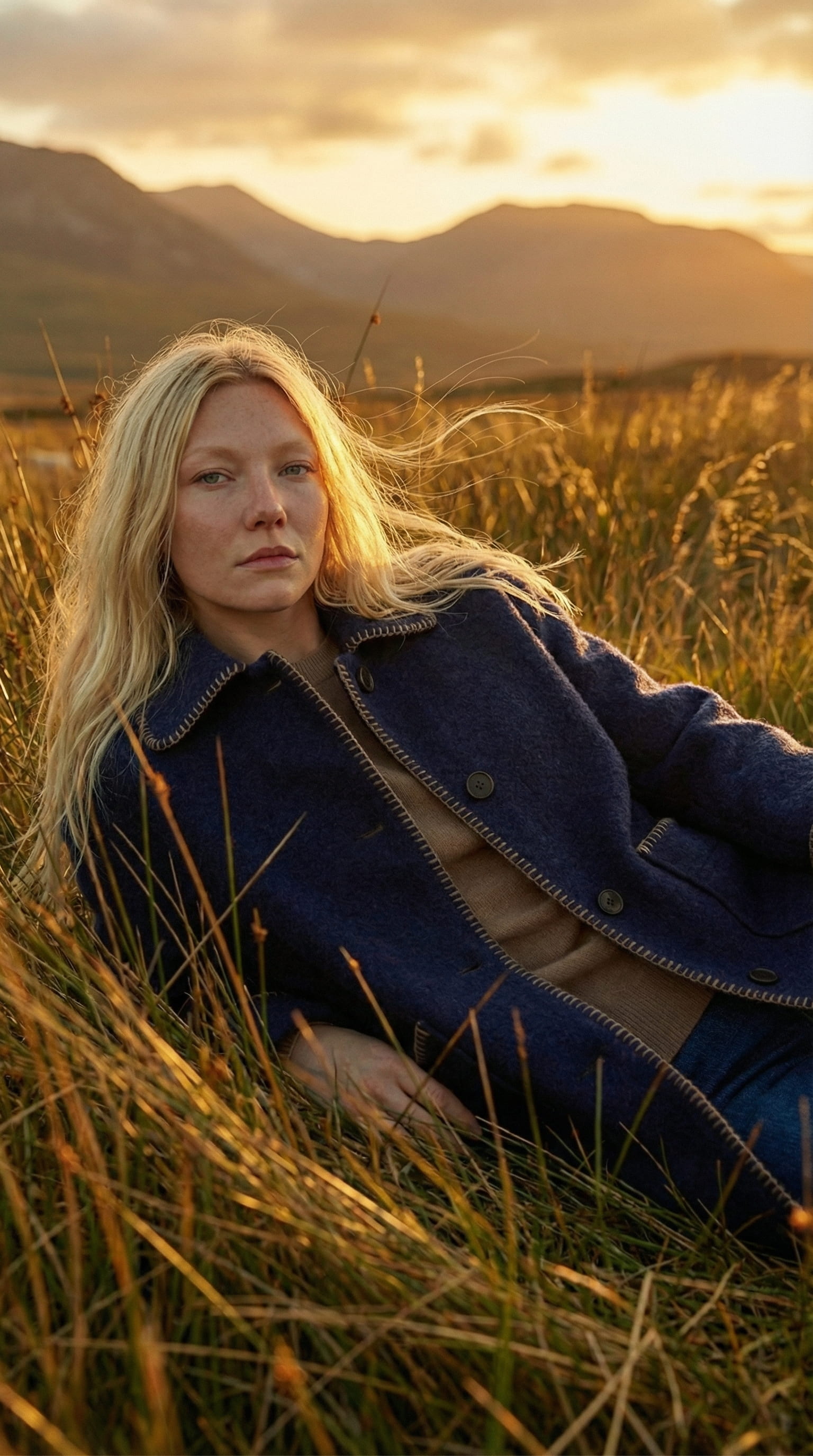
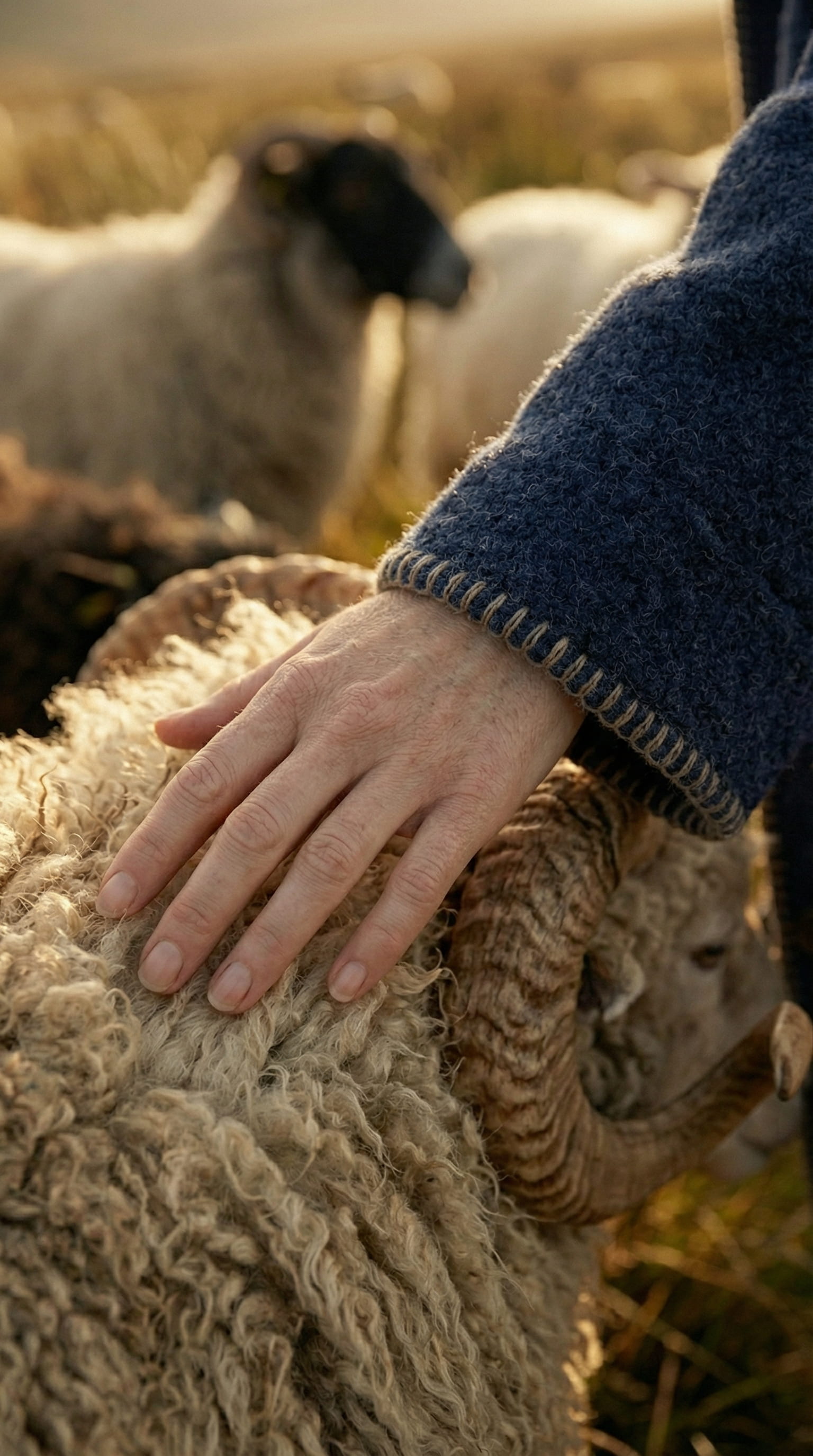
Wool from sheep that grazed on the same hills. The coat carries a material history before it carries a person.
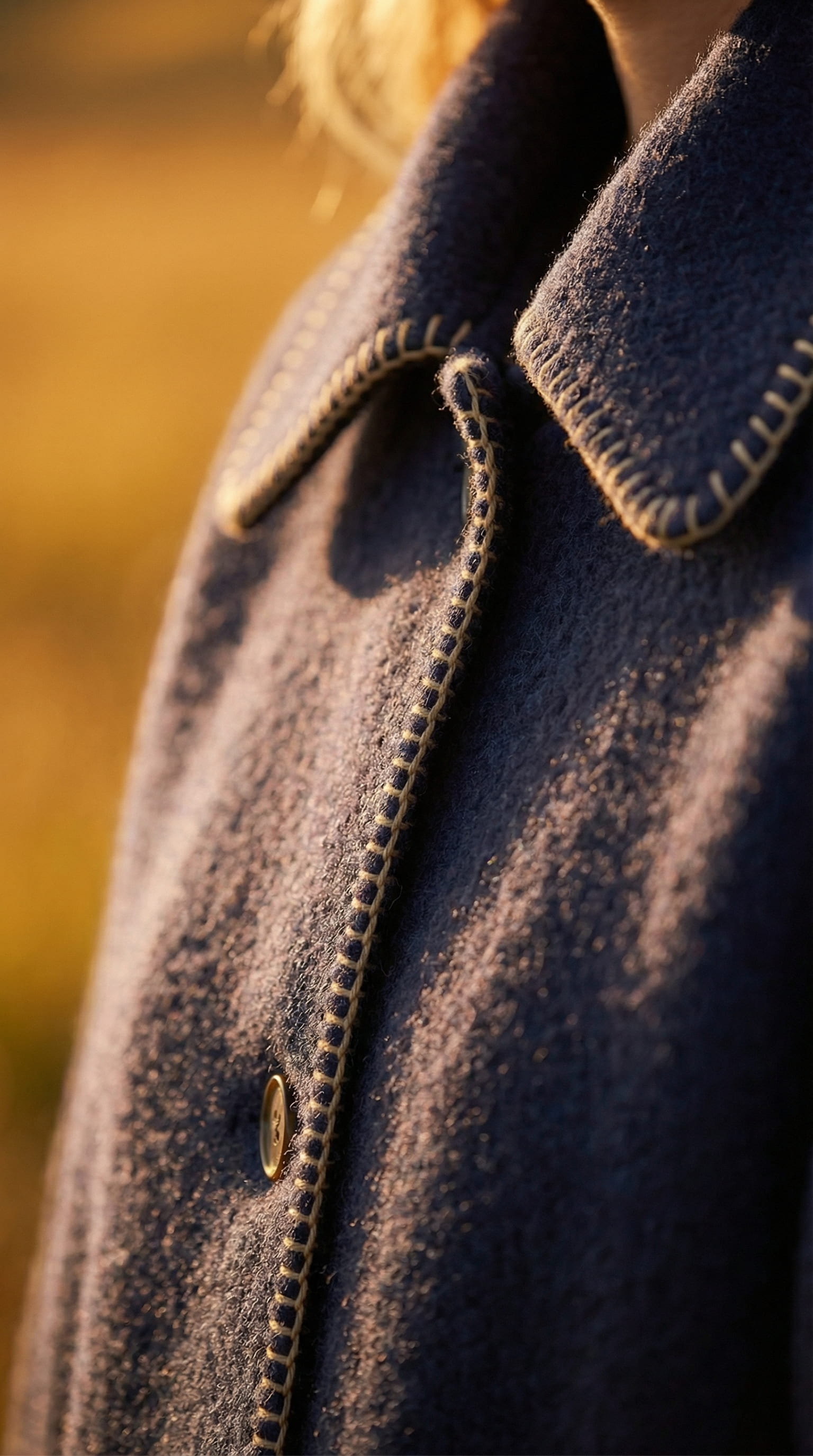
All frames were directed in golden hour light, lateral and grazing, because at that angle texture reads before shape does. The wool needed to be visible as a material, not just as a silhouette. Every frame with the model was directed from eye level or below, with grass in the foreground, to place her inside the landscape rather than posed in front of it.
Six frames were chosen across portrait, silhouette, movement, product, and detail to cover the coat from every register without repeating the same visual argument twice.
The video was chosen for this project because movement communicates what a still cannot: the weight of the fabric, the way it responds to wind, the texture of the landscape it belongs to. The decision to set the video in open countryside, with the flock present, was made to anchor the product in its material origin. Wool has a provenance. The environment makes that visible in a way that a studio or a clean location never could. For a brand built on natural materials and craft, that context is not decoration. It is the argument for why the product is worth what it costs.
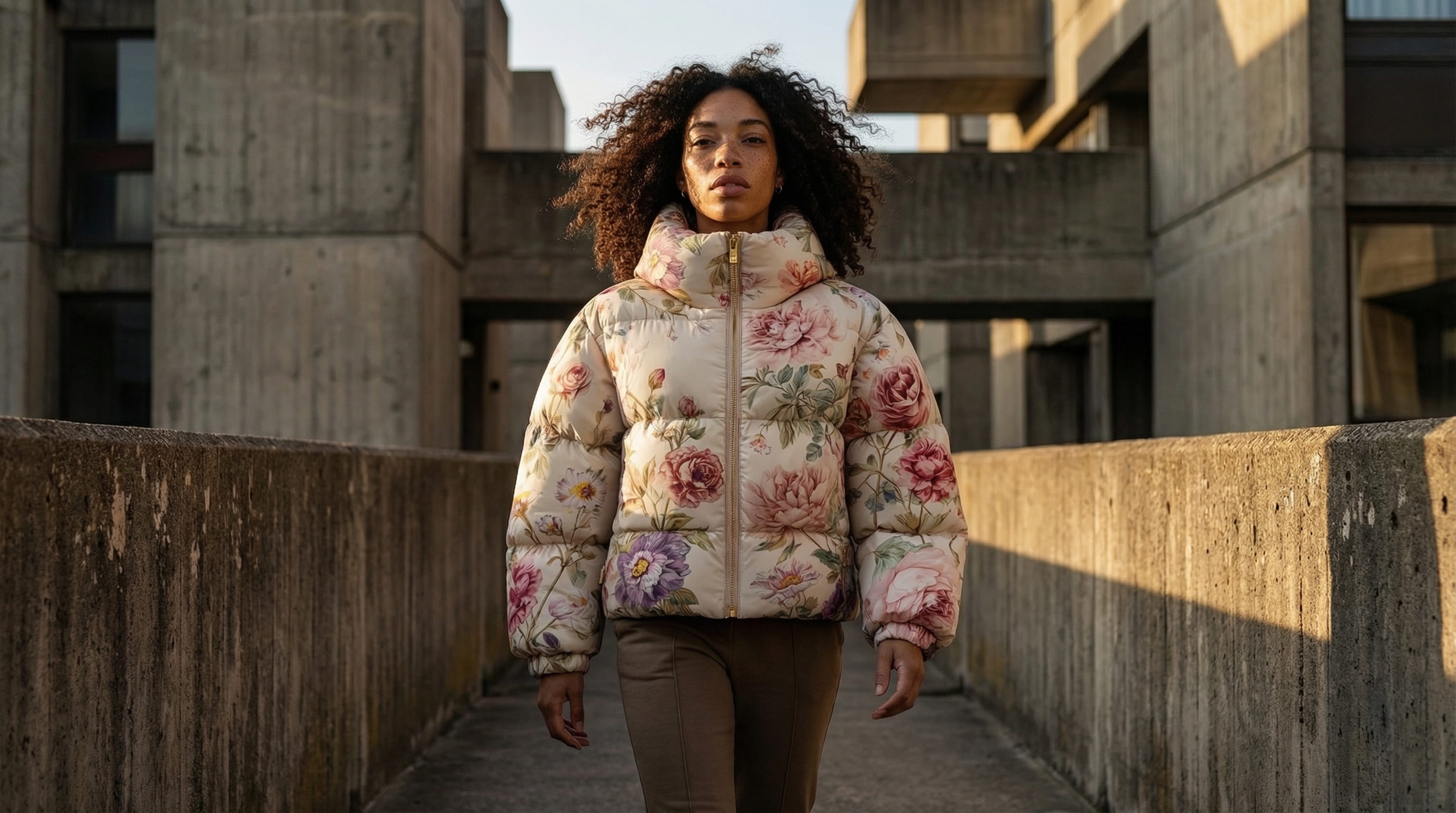
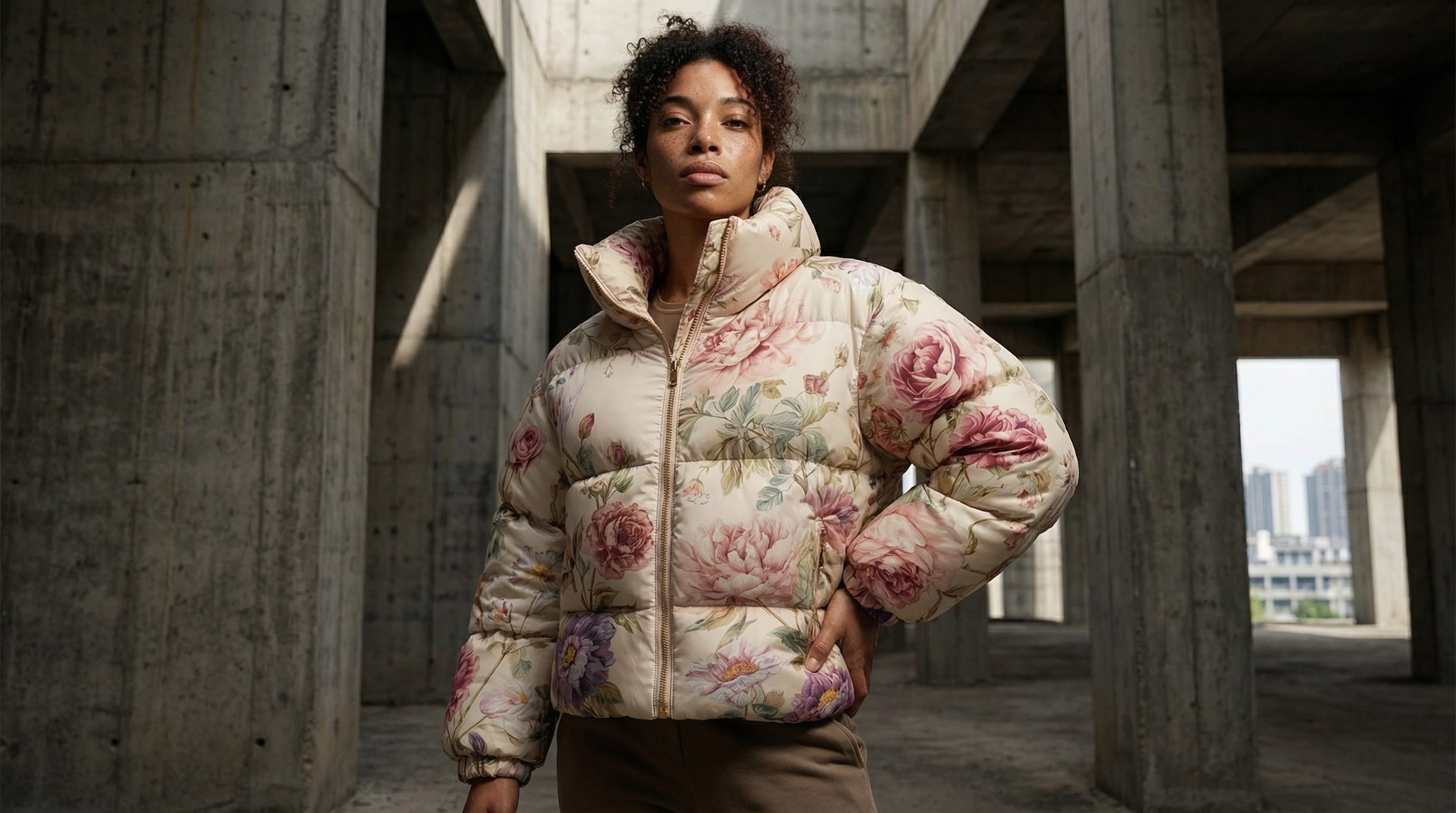
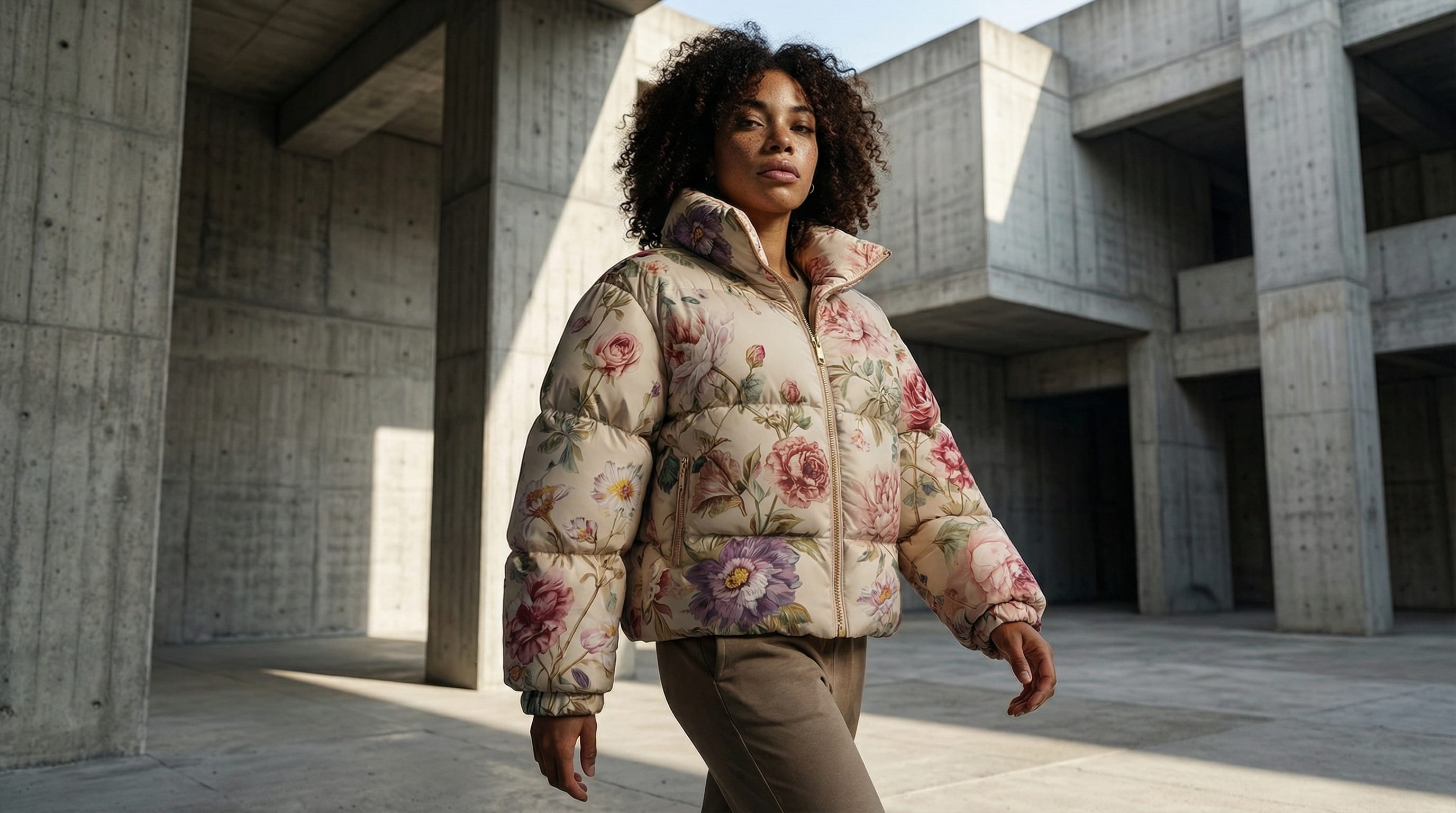
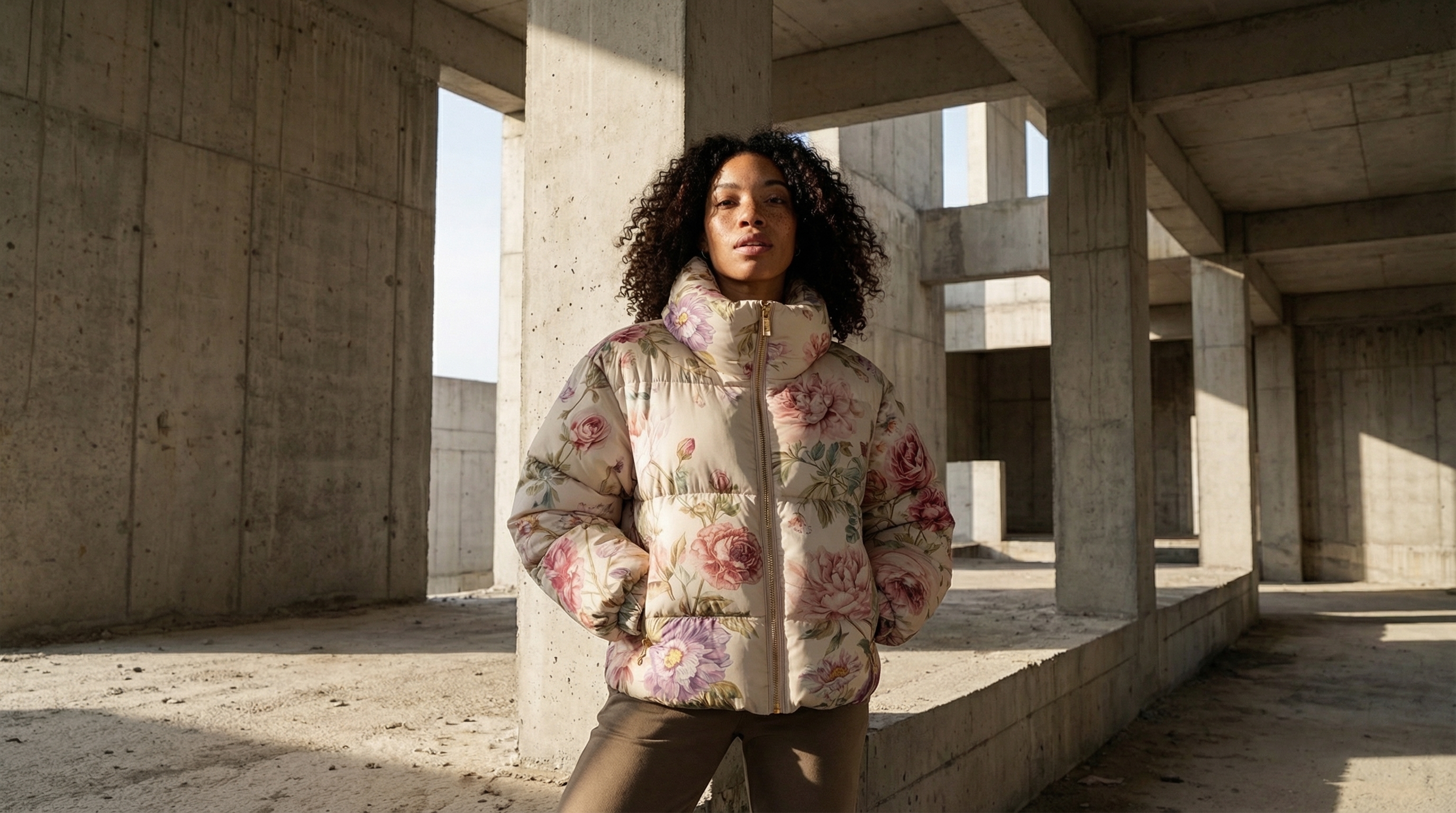
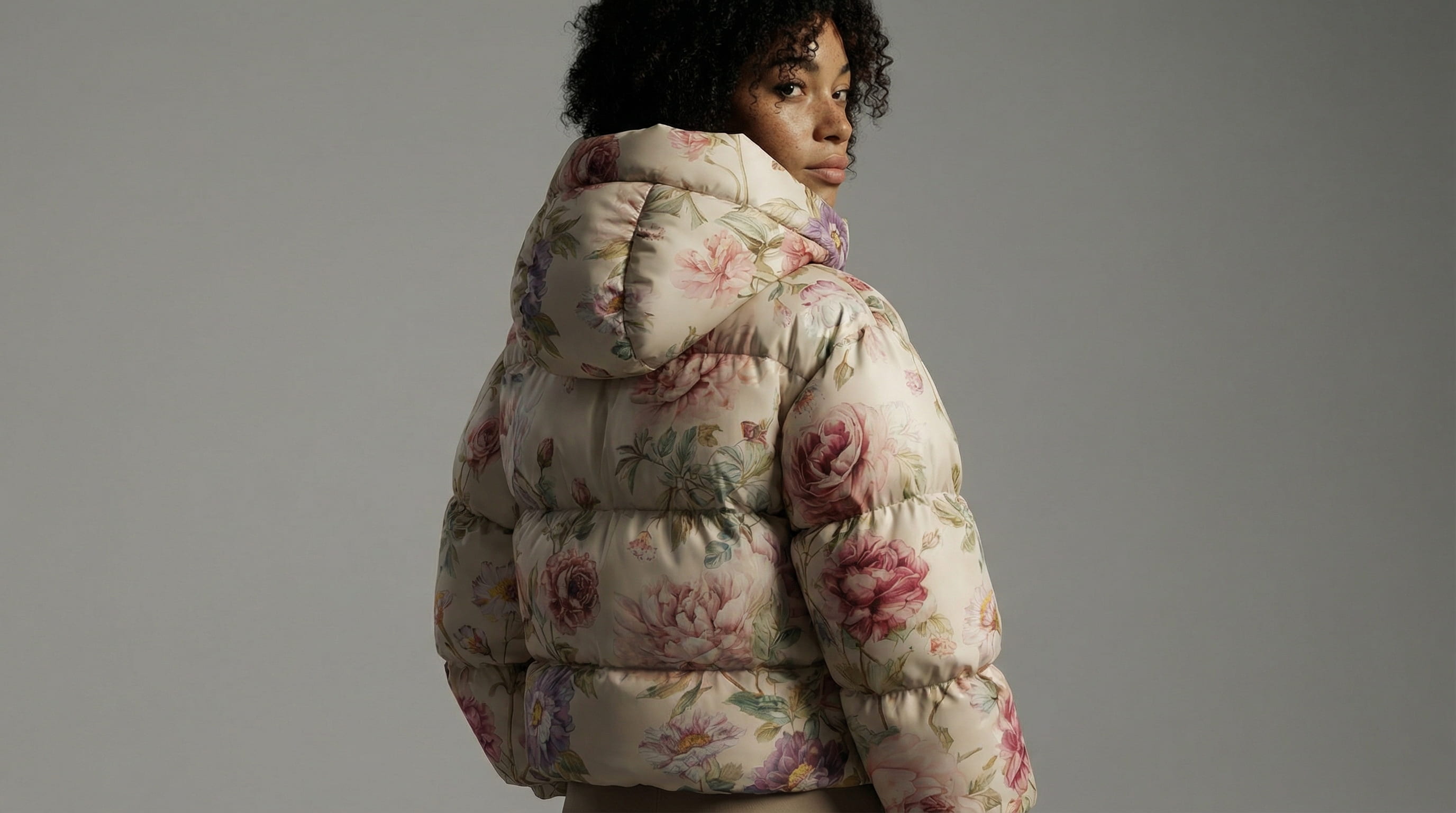
Flowers pressed under concrete.
The jacket was already floral and feminine enough. The creative decision was to place it inside raw brutalist architecture precisely because the environment would not accommodate it. Unfinished concrete structures, hard geometry, no softness anywhere in the frame. The contrast was the campaign.
All frames were directed with hard mid-day light, strongly directional, no diffusion, no fill. Soft light would have made the flowers decorative. At that angle the shadows fall geometric on the concrete and the pattern holds its own against them.
The model was directed from a low angle in most frames, camera positioned below eye level looking up, which gives the figure mass and presence. The decision to have the model looking directly into the camera was deliberate across the campaign, creating a frontality that adds weight to the image.
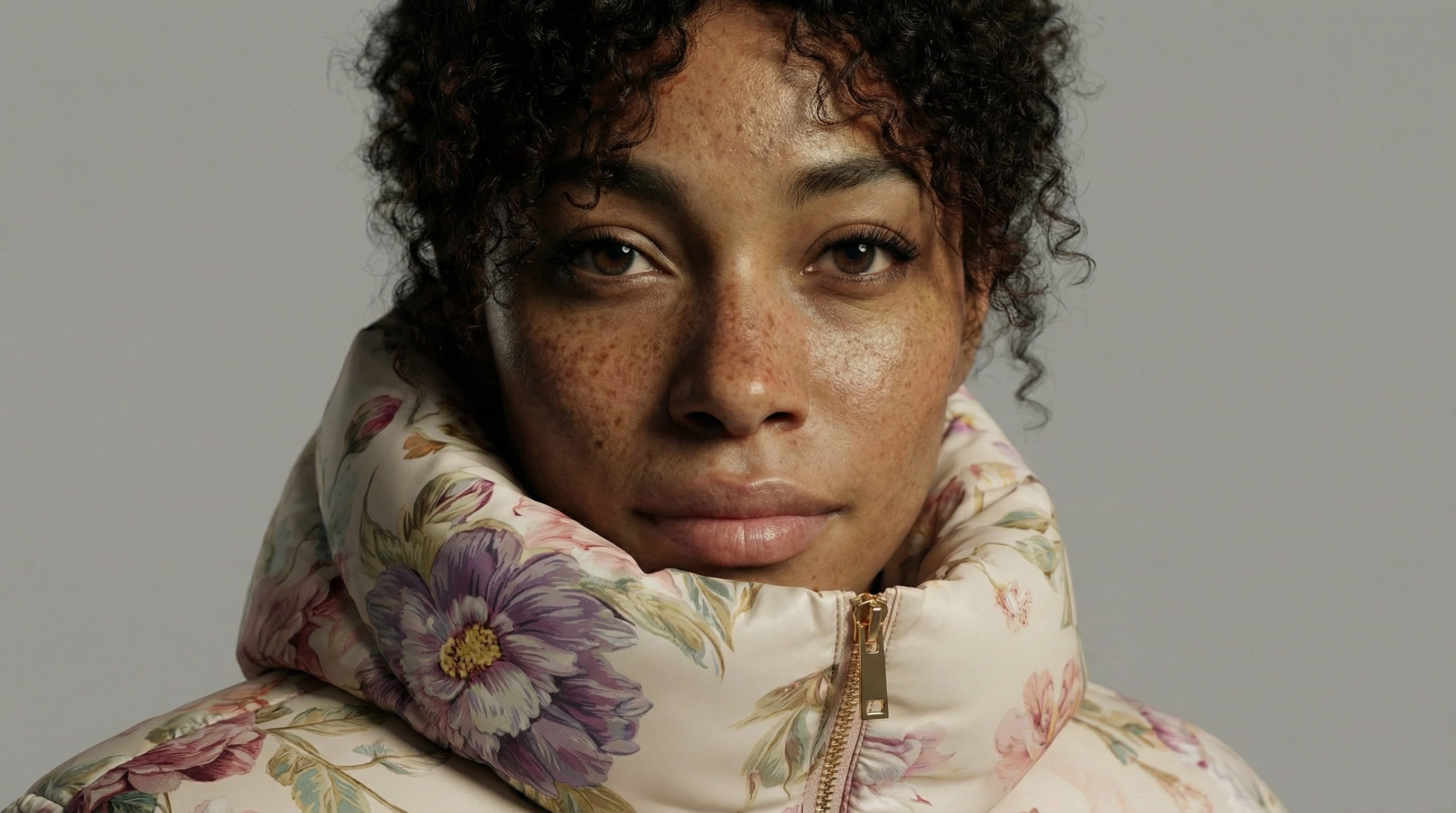
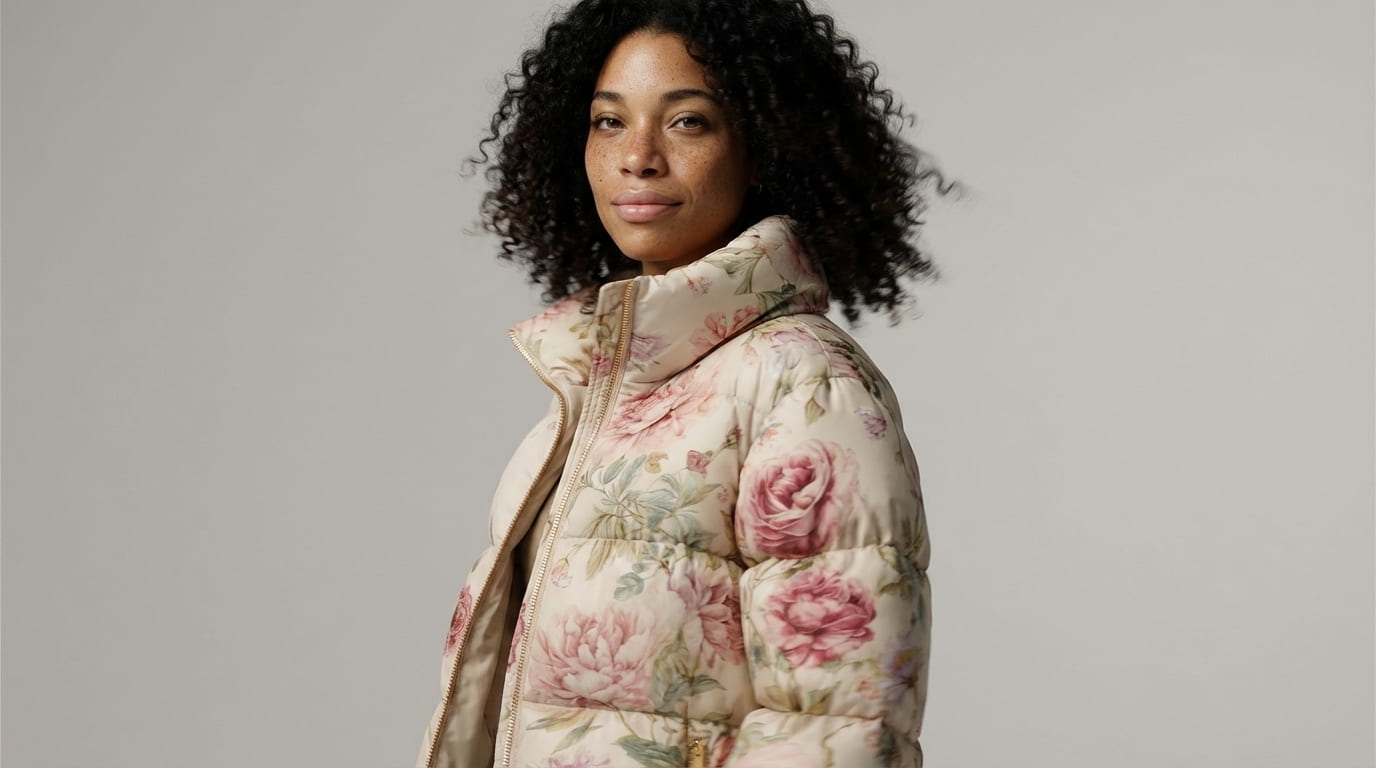
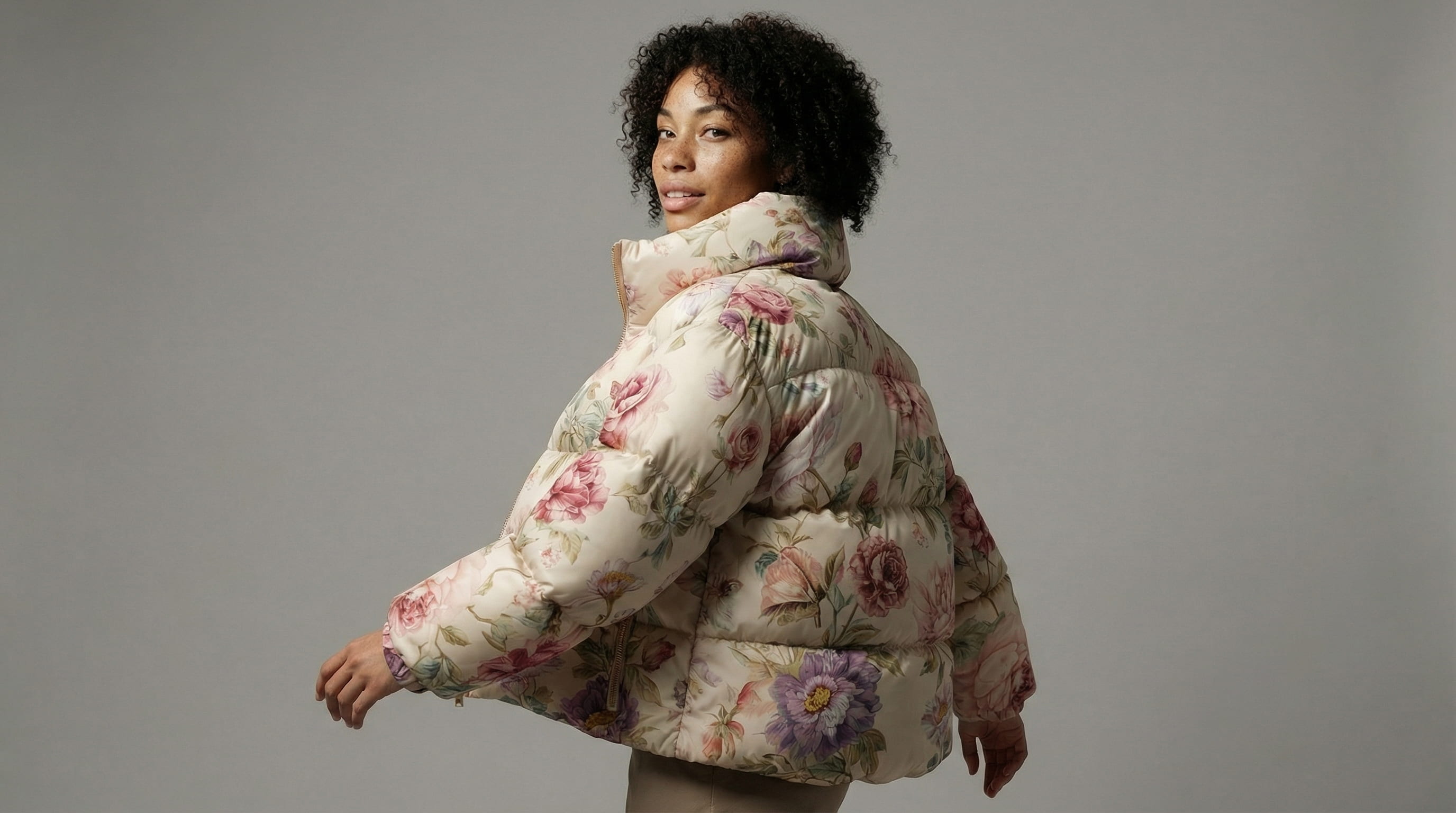
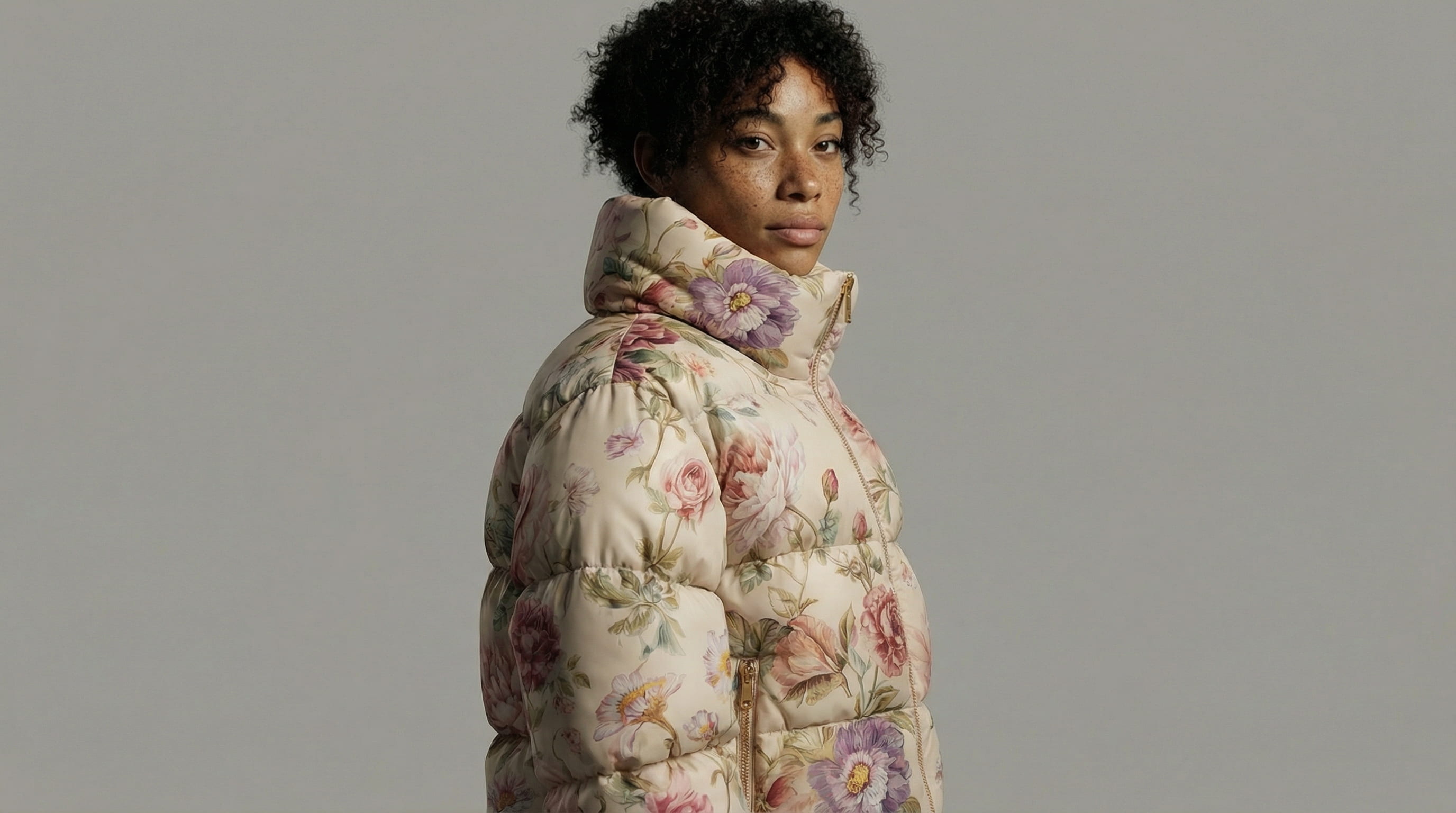
The campaign asked why the jacket exists. The lookbook asks what it looks like up close.
Maintaining the same model across both projects was a deliberate decision. A single visual identity running through two completely different creative registers. The environment, the light, the framing, the intention all changed. The jacket and the person wearing it stayed the same. That continuity is what allows both projects to read as the same brand.
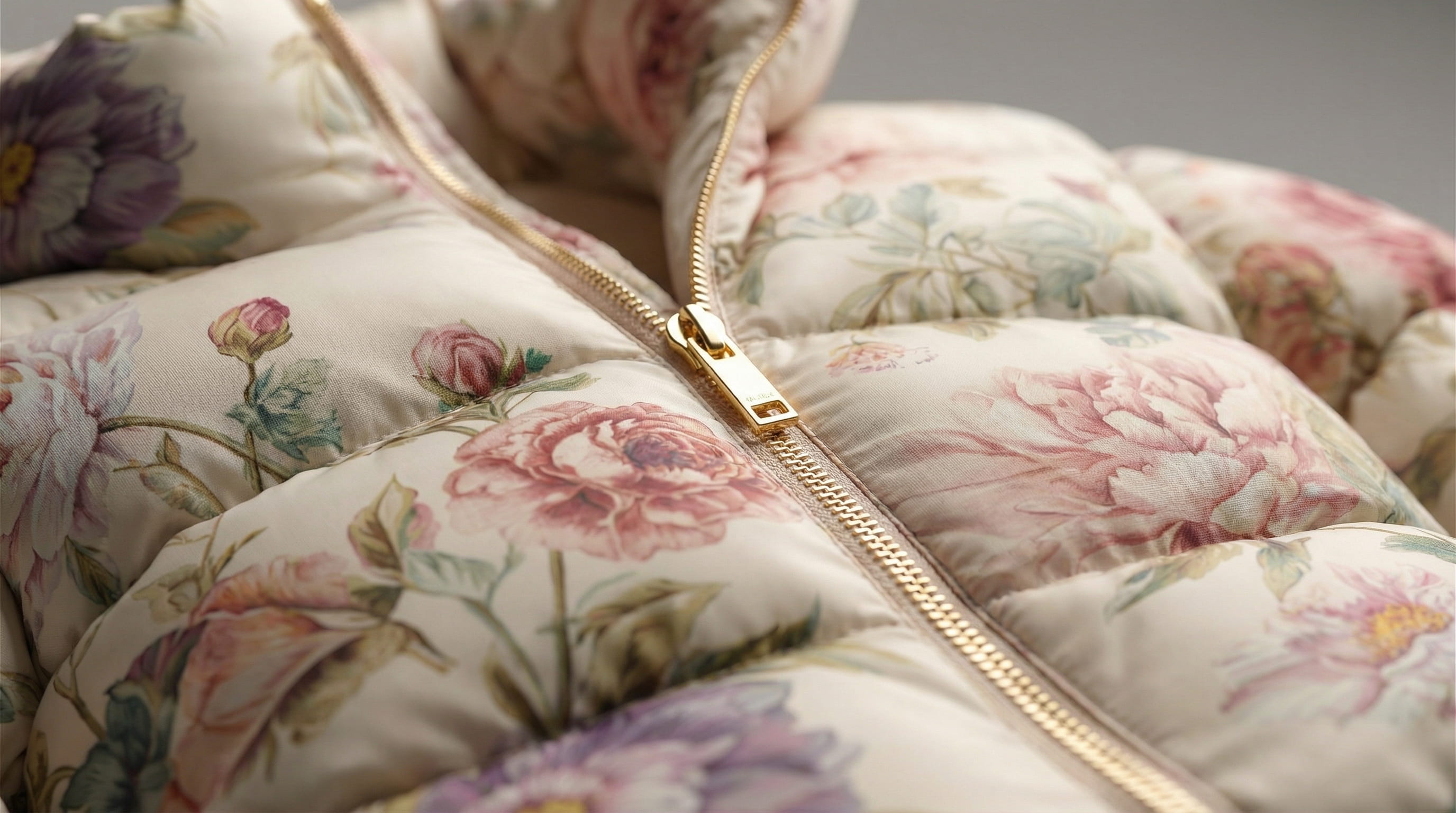
The lookbook moves through the jacket systematically: how it sits on the body from the front, the side, the back. The volume of the quilted panels. The gold zip against the botanical print. A final macro frame where the flowers are close enough to read as individual brushstrokes.
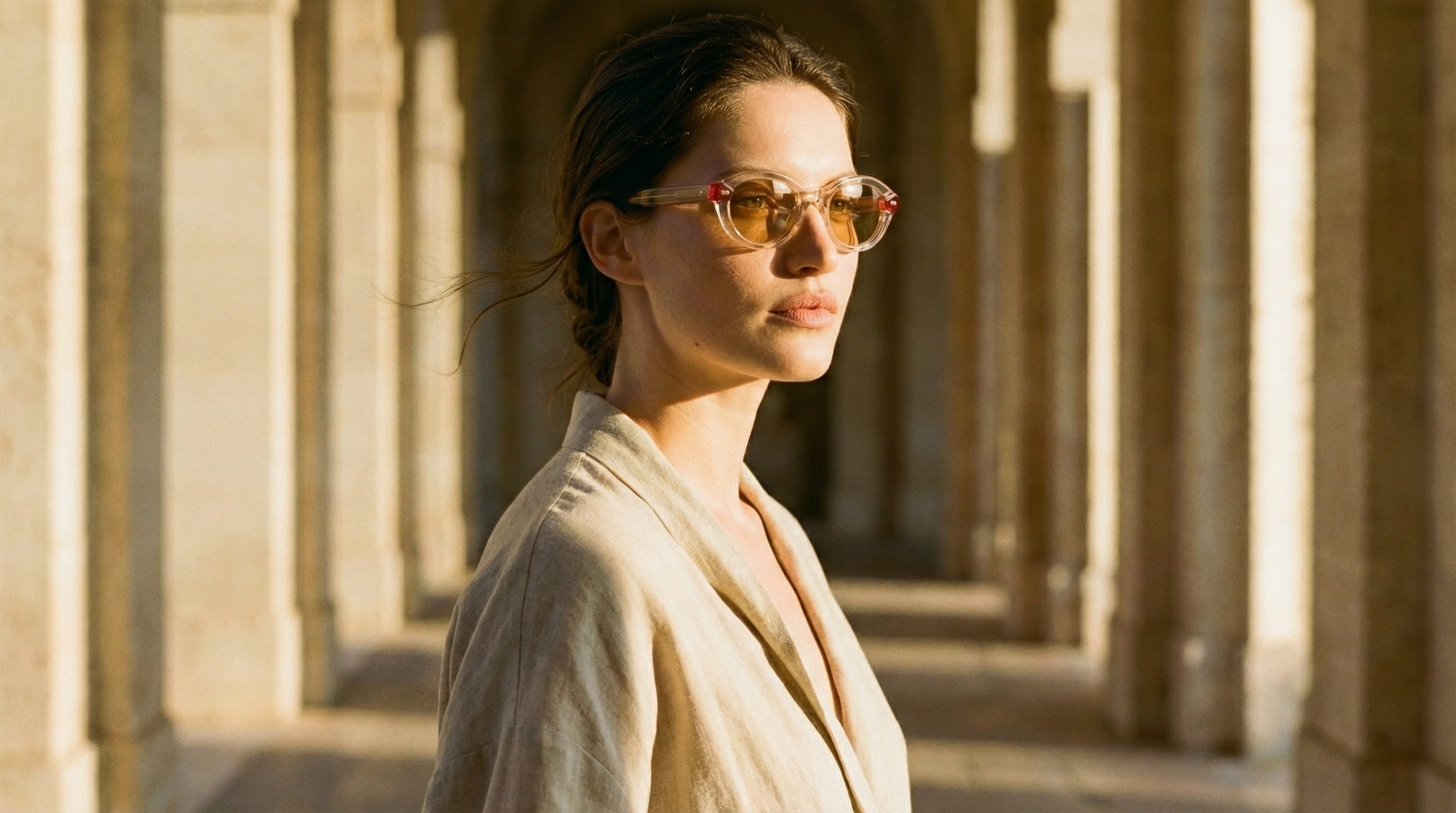
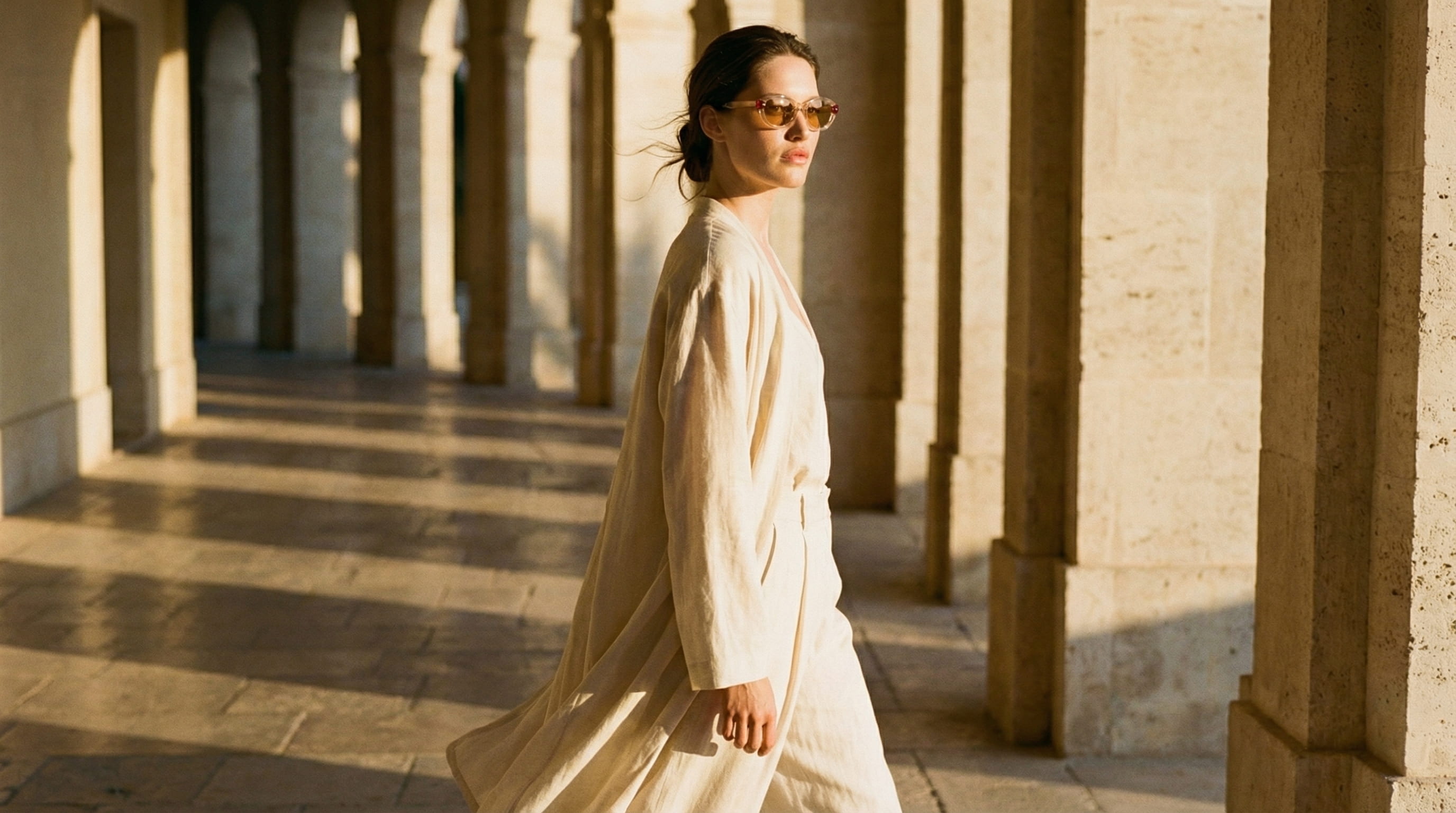
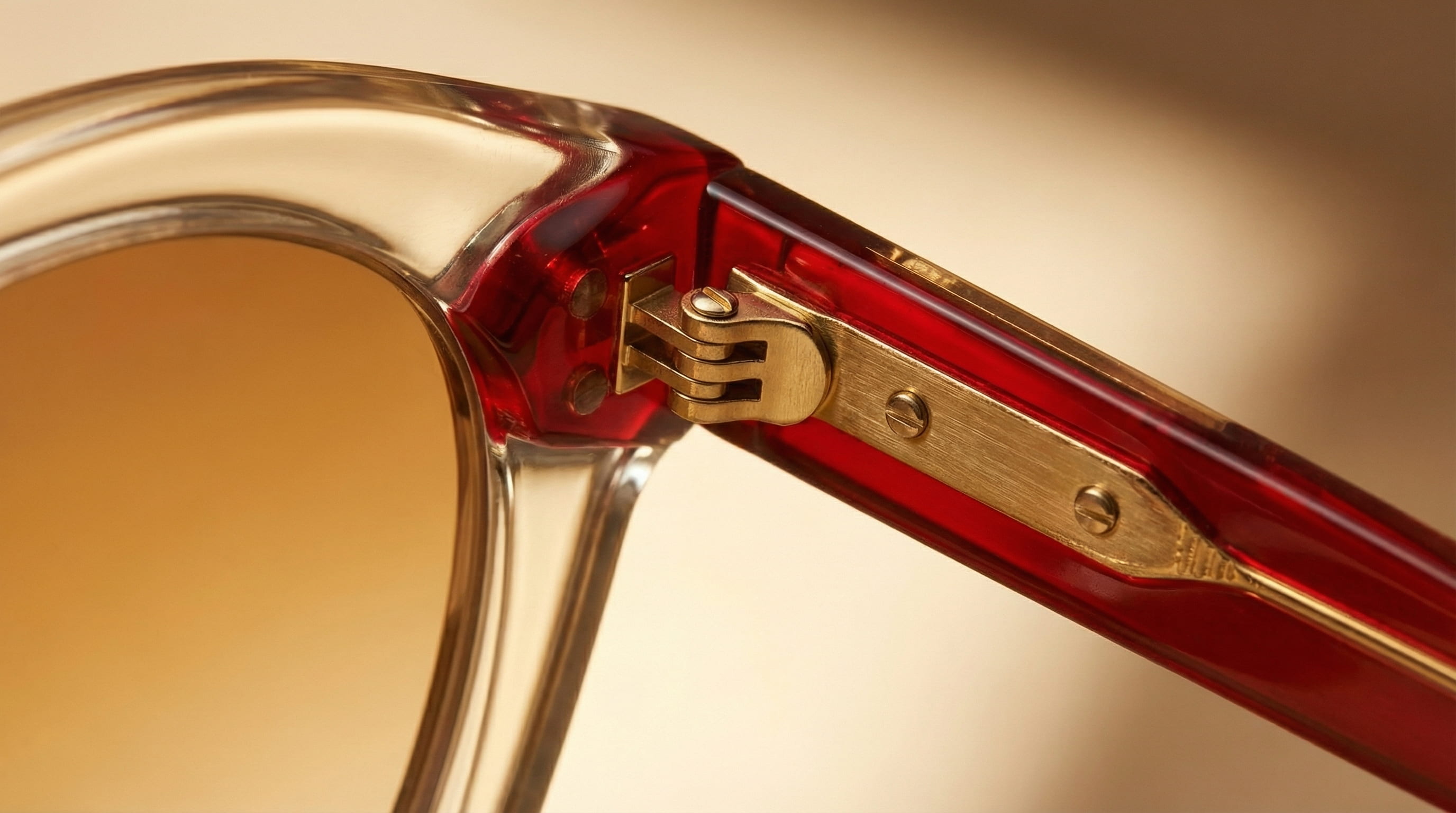
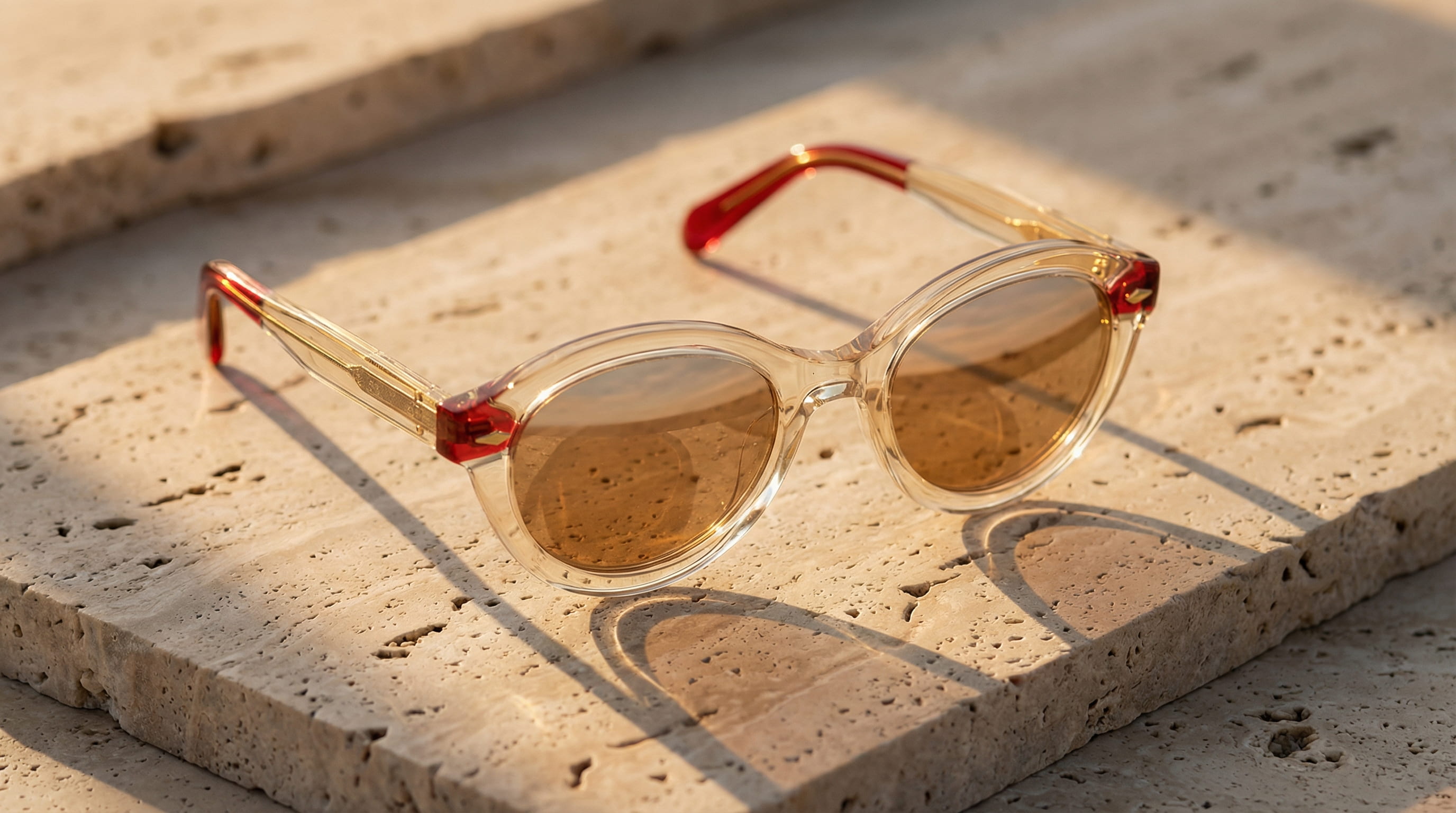
The starting point was an elegant frame with a touch of modernity and the feeling of somewhere worth being. Transparent acetate, red temples, gold hardware. The kind of object that belongs to a good summer afternoon.
The Mediterranean was chosen as the visual world for that reason. Limestone colonnades, travertine surfaces, late afternoon light that arrives at an angle and stays long enough to cast shadows worth composing around. All frames with the model were directed inside that architecture at golden hour, with lateral light that grazes the stone and the frame in the same gesture. The model was kept in profile or three-quarter angle throughout so the eye goes to the glasses rather than the face wearing them.
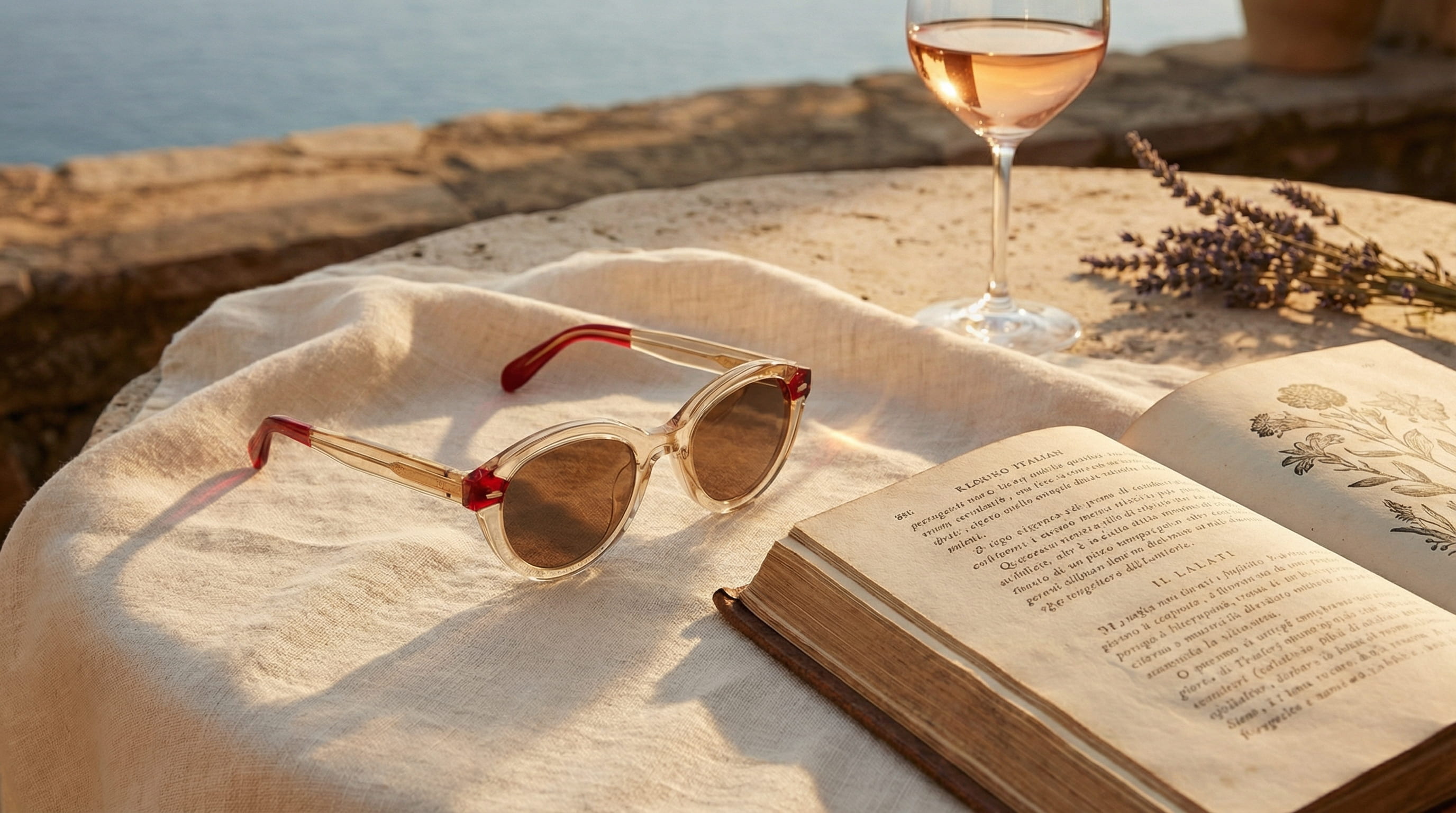
The still life places the glasses beside an Italian book and a glass of rosé on a stone surface. These objects were chosen deliberately. A specific afternoon, not a generic summer.
The macro closes on the hinge, where the transparent acetate meets the red and the gold. That detail was chosen because it is where the design makes its clearest statement.
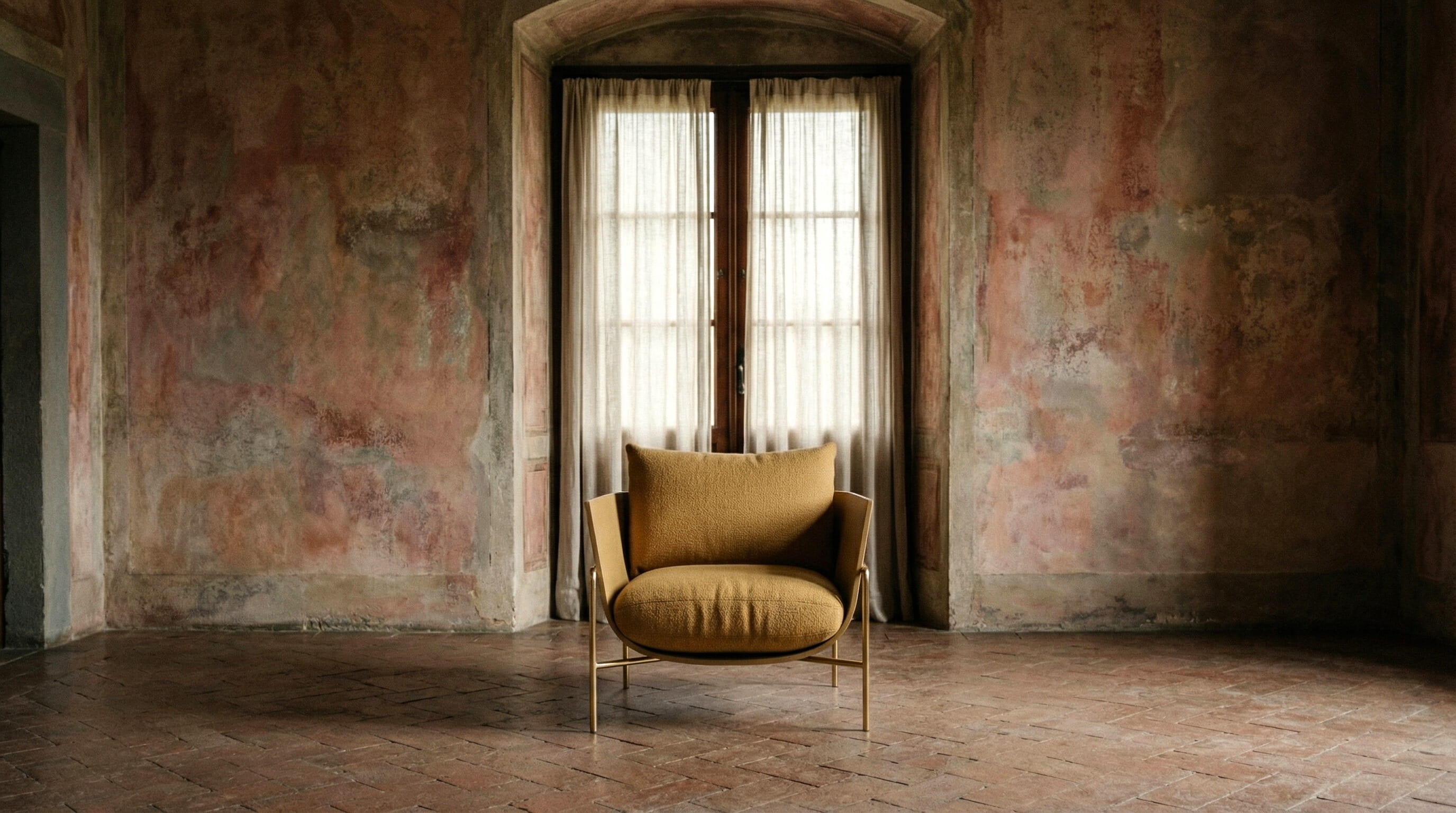
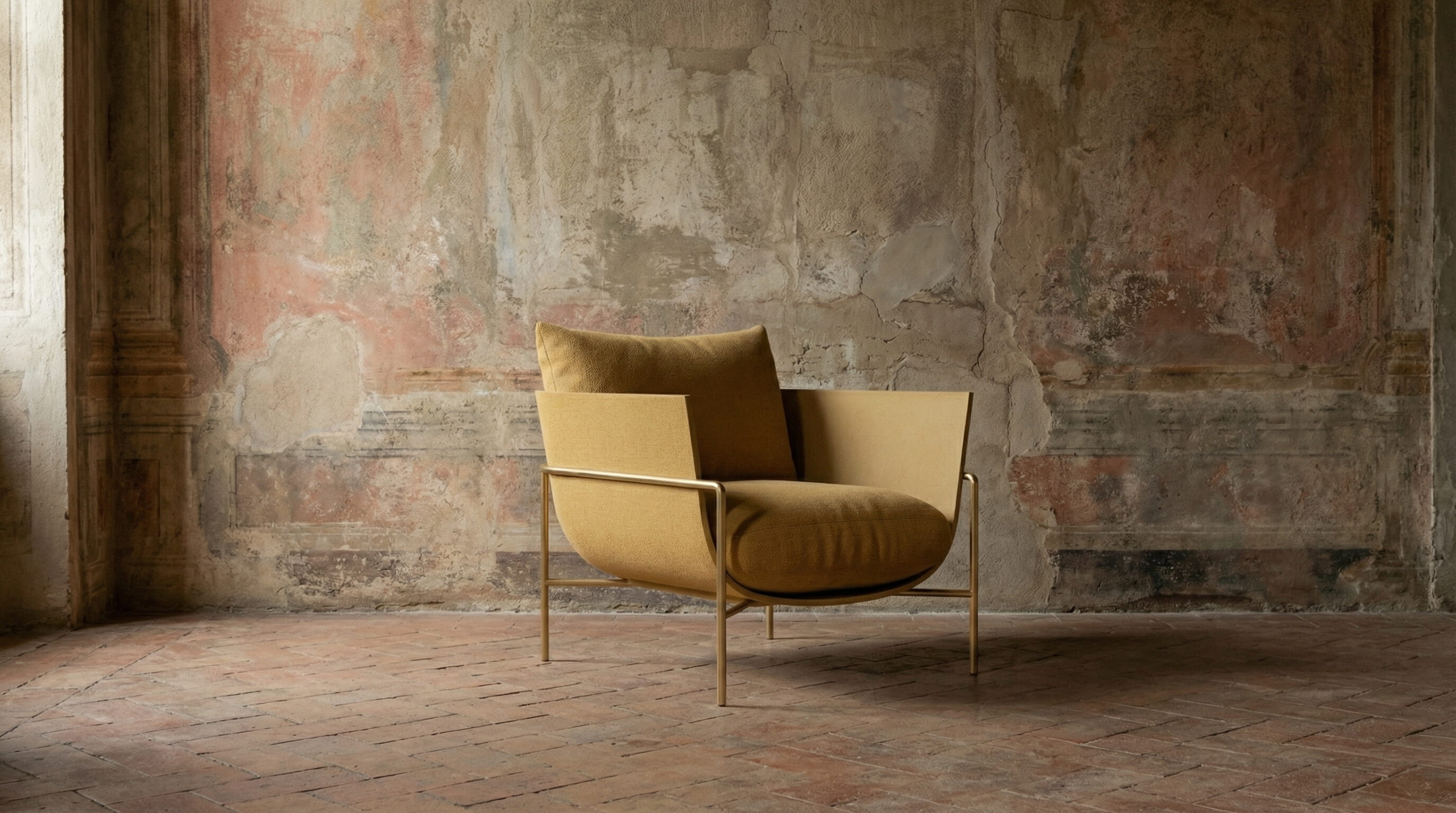
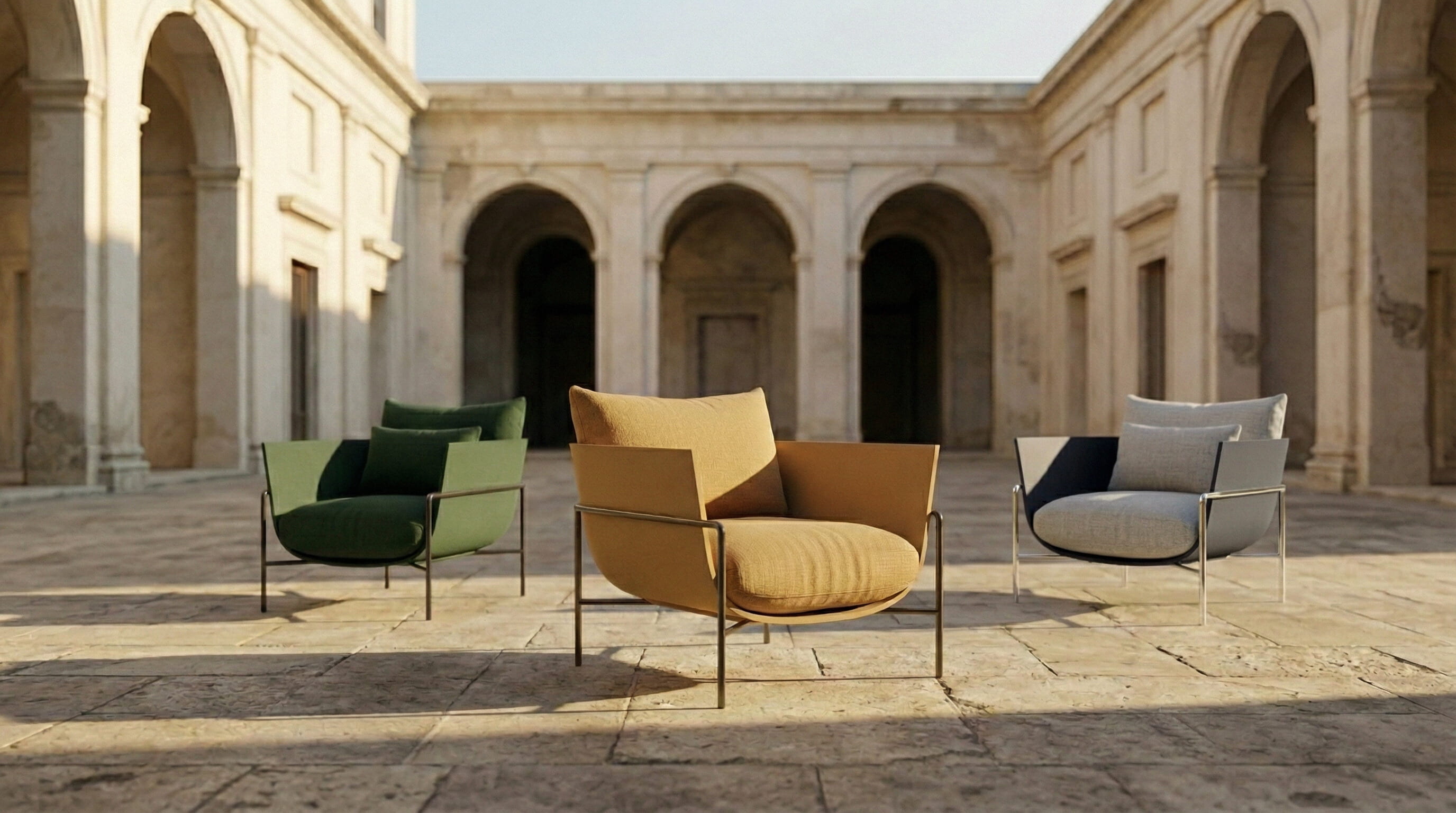
A contemporary chair with a thin metal frame and bouclé cushions placed inside an Italian palazzo with centuries of use still visible on its walls. That was the spatial argument from the beginning.
The frescoed walls were chosen because the space carries time in a way that very few interiors do. The plaster is lifting, the pigment has faded in layers, the terracotta floor carries the marks of everything that happened there before. A newly designed object inside that kind of room reads differently than it would against a white wall or inside a clean studio.
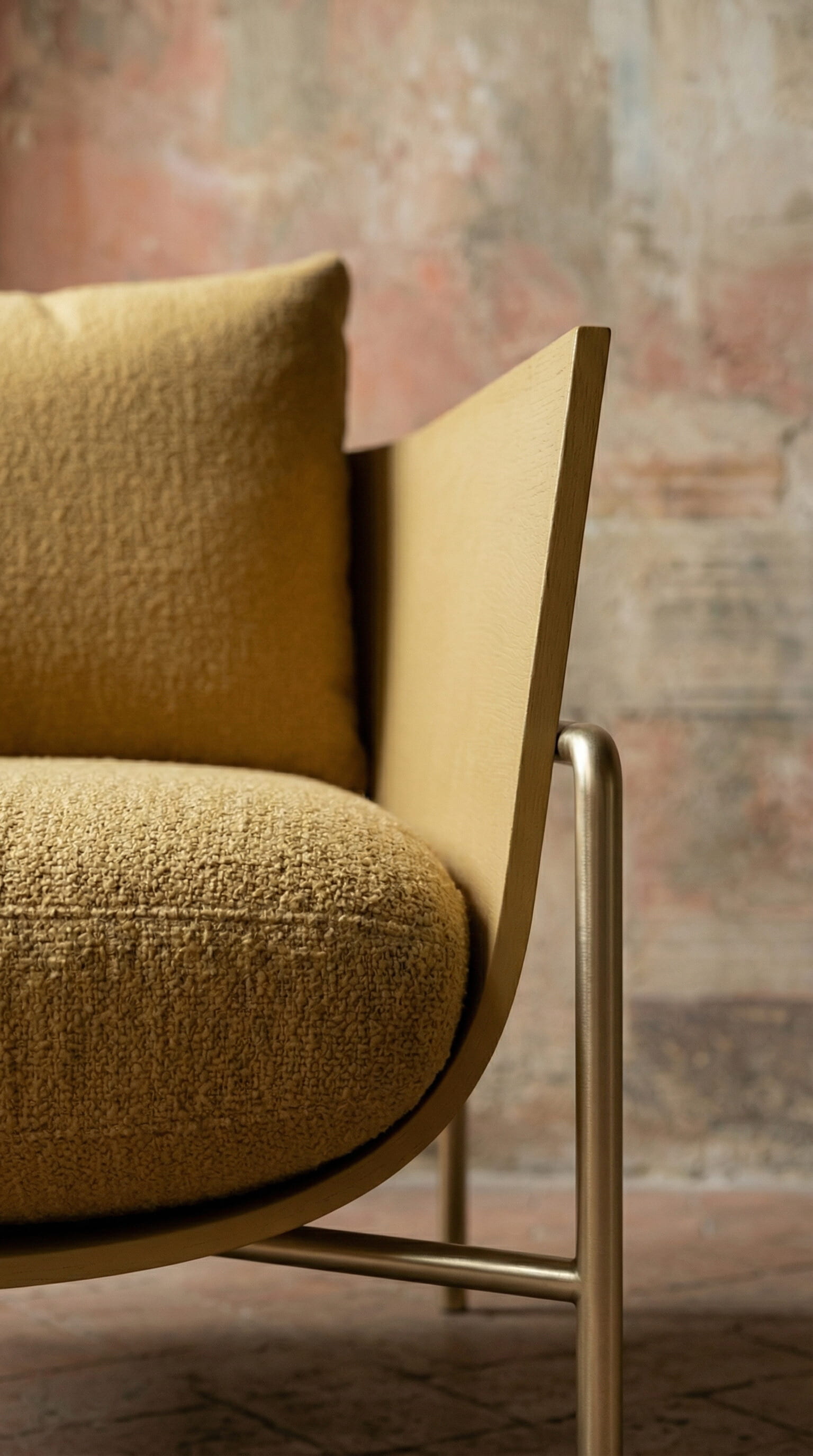
Four frames were directed to cover different readings of the piece. The three colorways together in an open courtyard to show range inside a single image. A lateral view against the degraded wall to read the silhouette and the thinness of the frame. A frontal centered composition with the chair placed in front of a tall arched window, the curtain behind it diffusing the light into the room. And a macro on the point where the metal meets the fabric, because the material conversation between the frame and the bouclé is where the design is most specific.
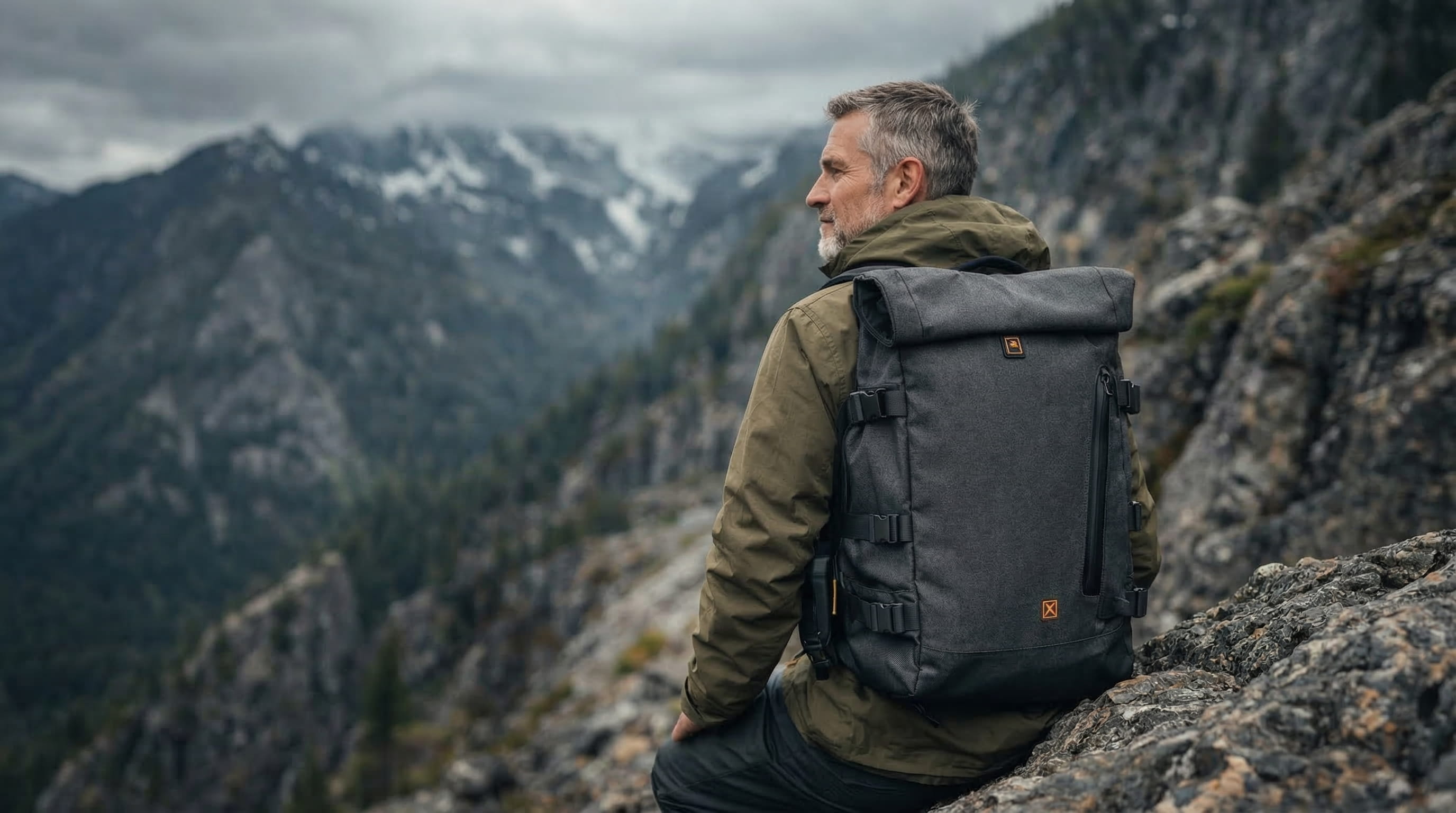
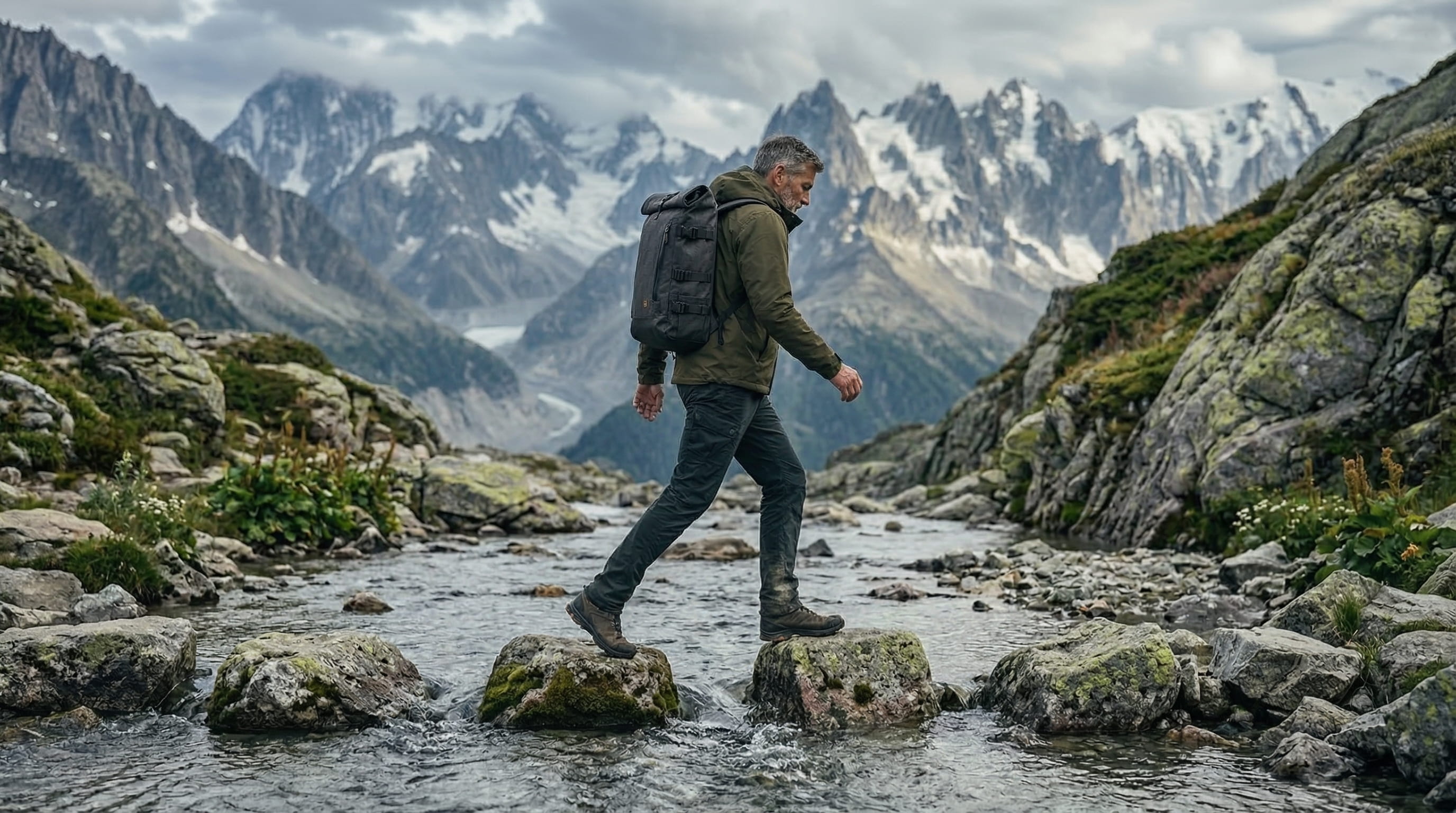
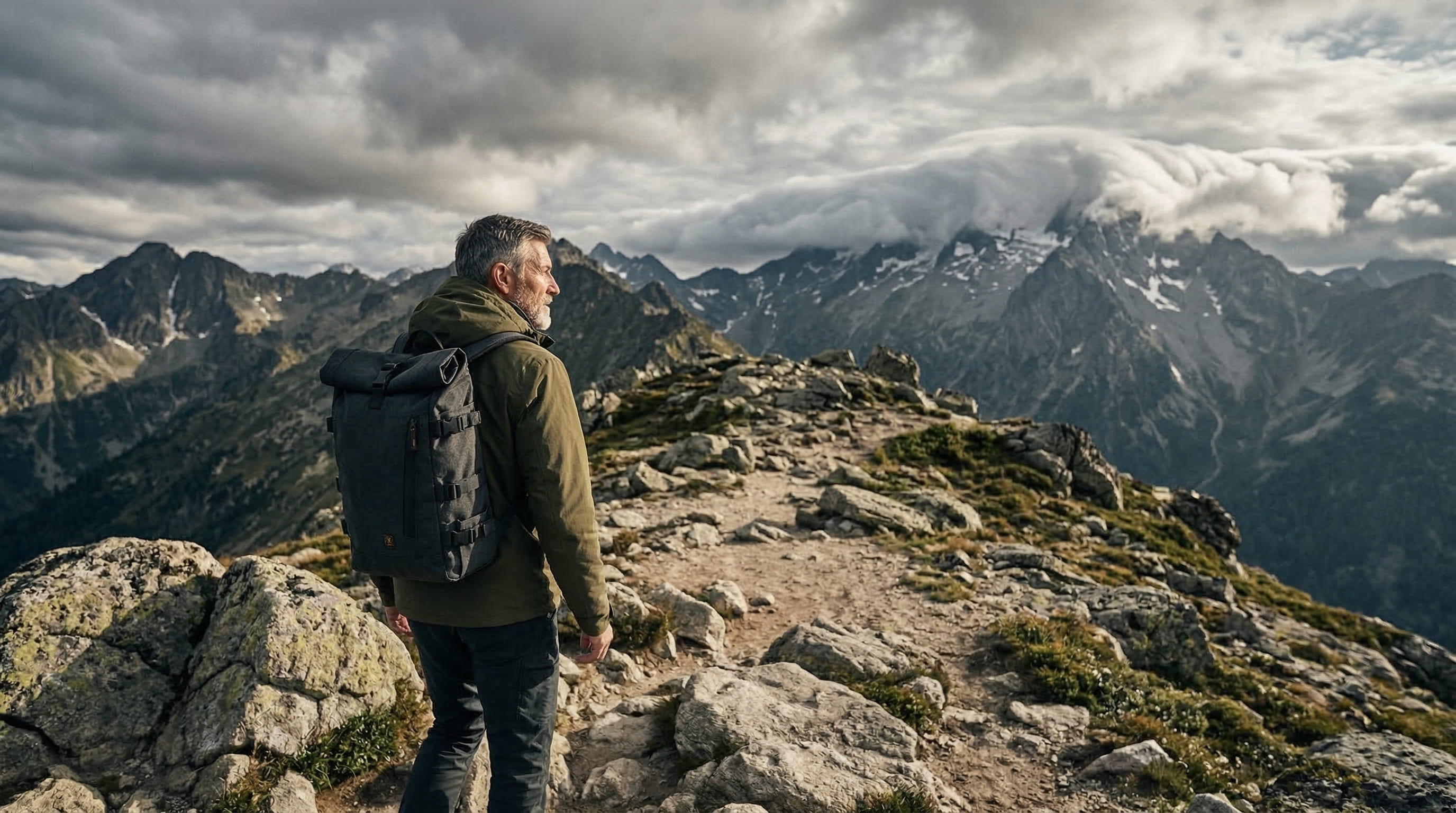
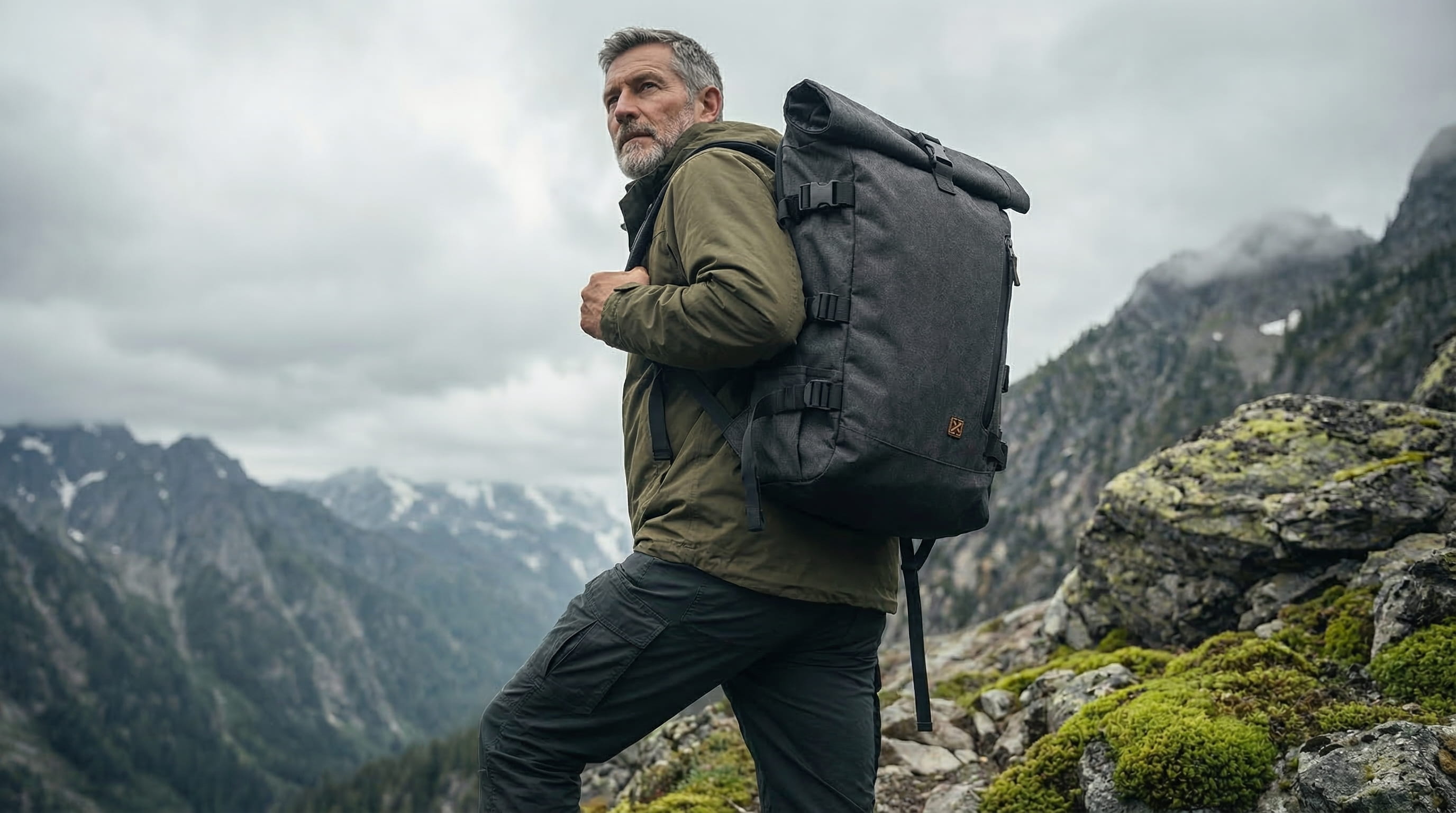
There is a version of outdoor that belongs to the young. This was not that version.
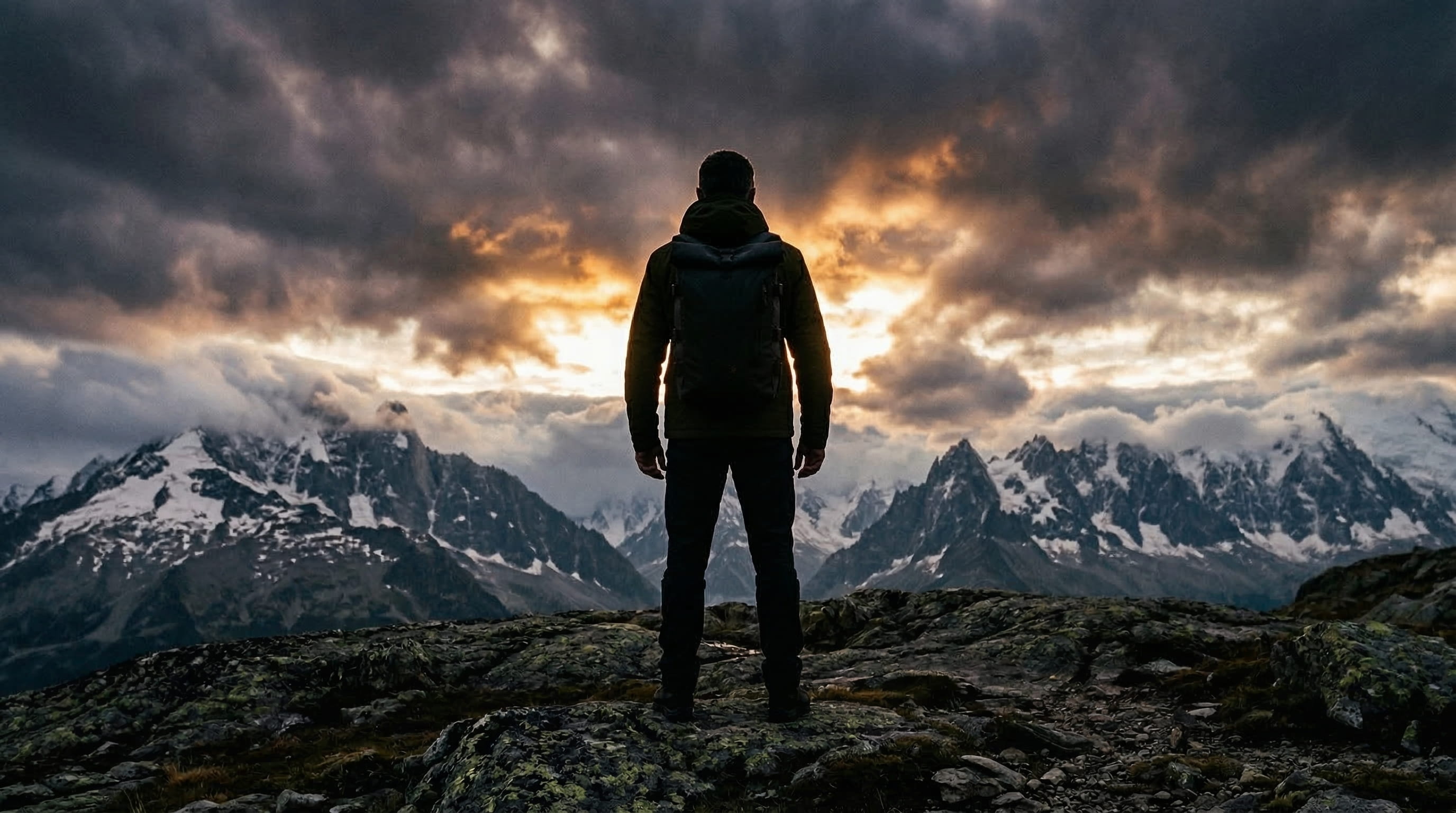
The choice was someone mid-fifties, above the treeline, in weather that has not decided yet. Someone whose relationship with equipment has deepened over time. Someone who chooses a backpack knowing exactly what they need from it. That kind of certainty reads in the way a person moves through terrain.
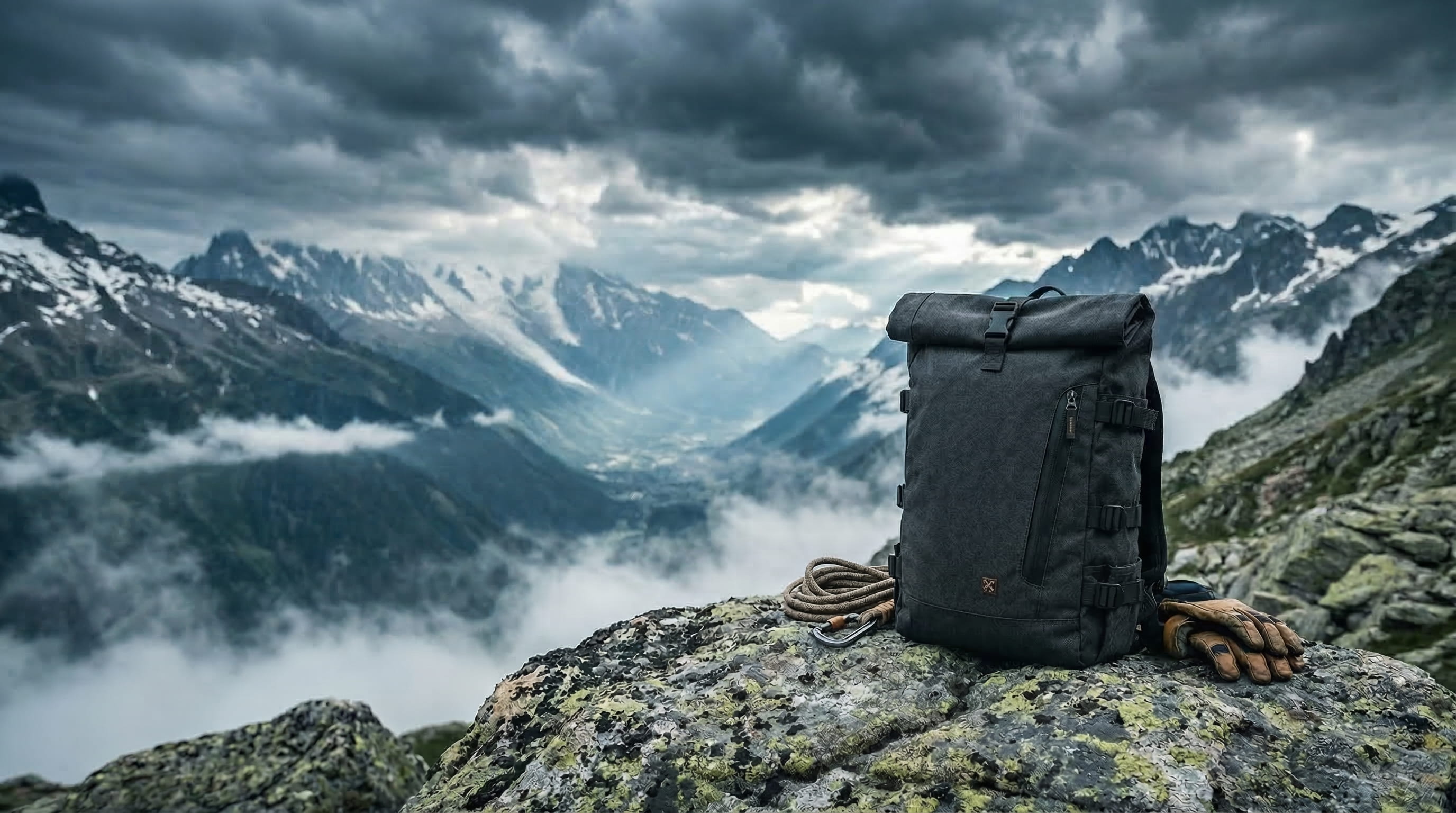
Most frames were directed at eye level with a medium telephoto focal length, shallow depth of field keeping the figure sharp against a softened mountain background. One frame places the product alone on a rock beside a climbing rope and gloves, objects chosen to establish the most immediate context for the bag without limiting what it could be used for.
The light was kept overcast throughout. One exception: the first frame, directed from a low angle, wide focal length, figure centered and in full silhouette against a sky breaking open at the horizon, back to camera, the backpack fully visible. That framing was chosen to show the product as a complete object and to hold the particular feeling of standing somewhere that required effort to reach, looking at what is still ahead.
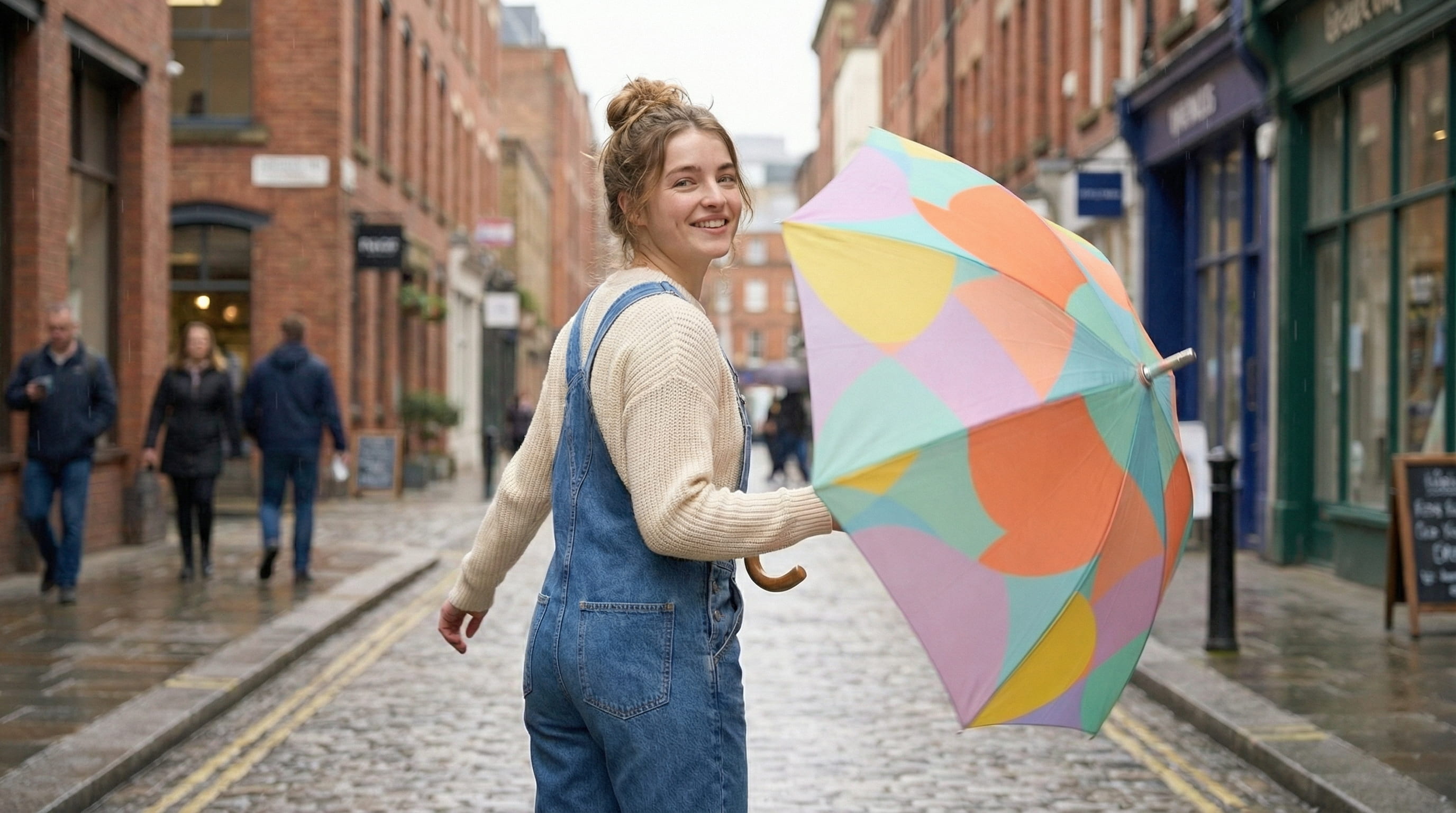
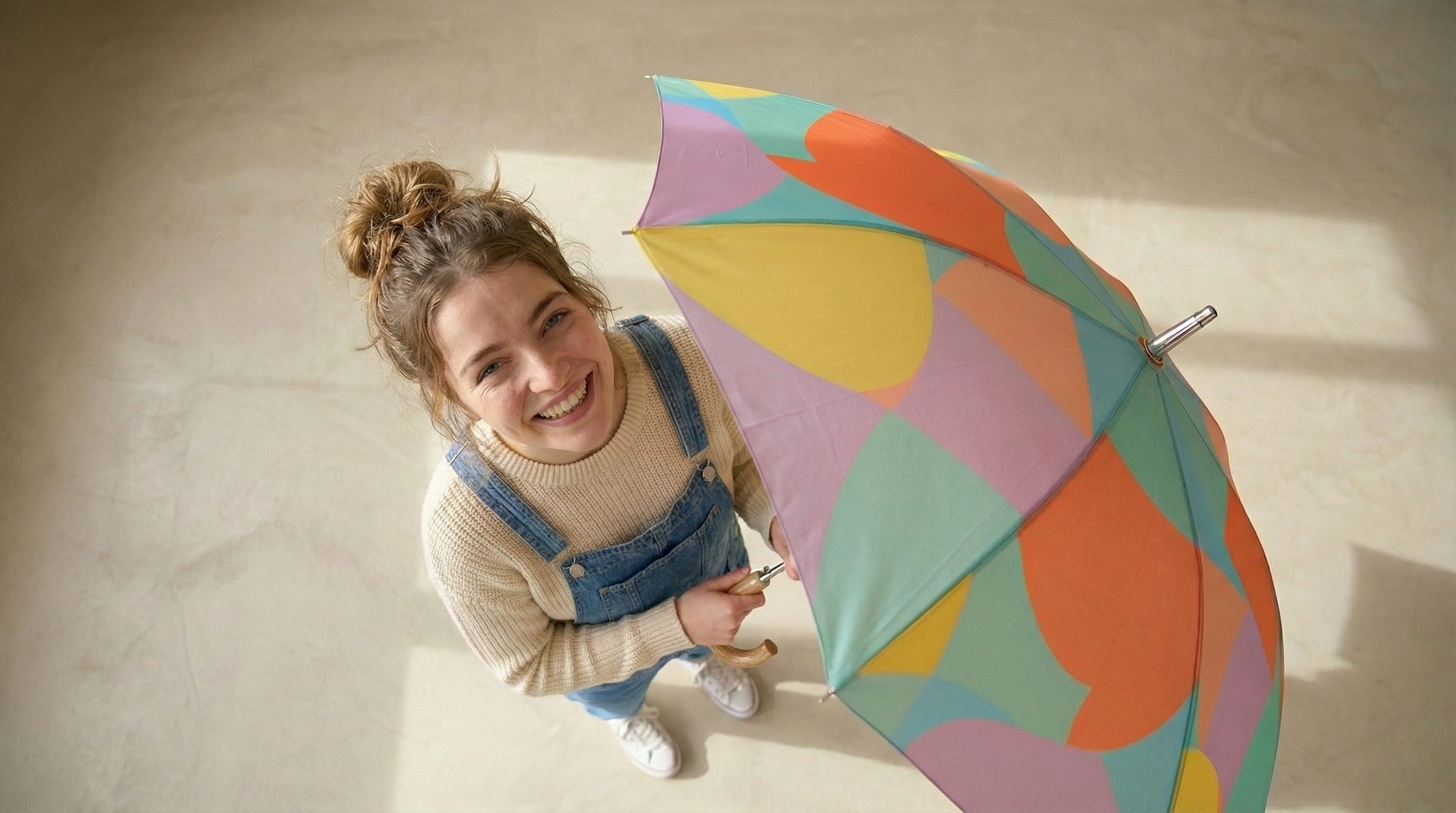
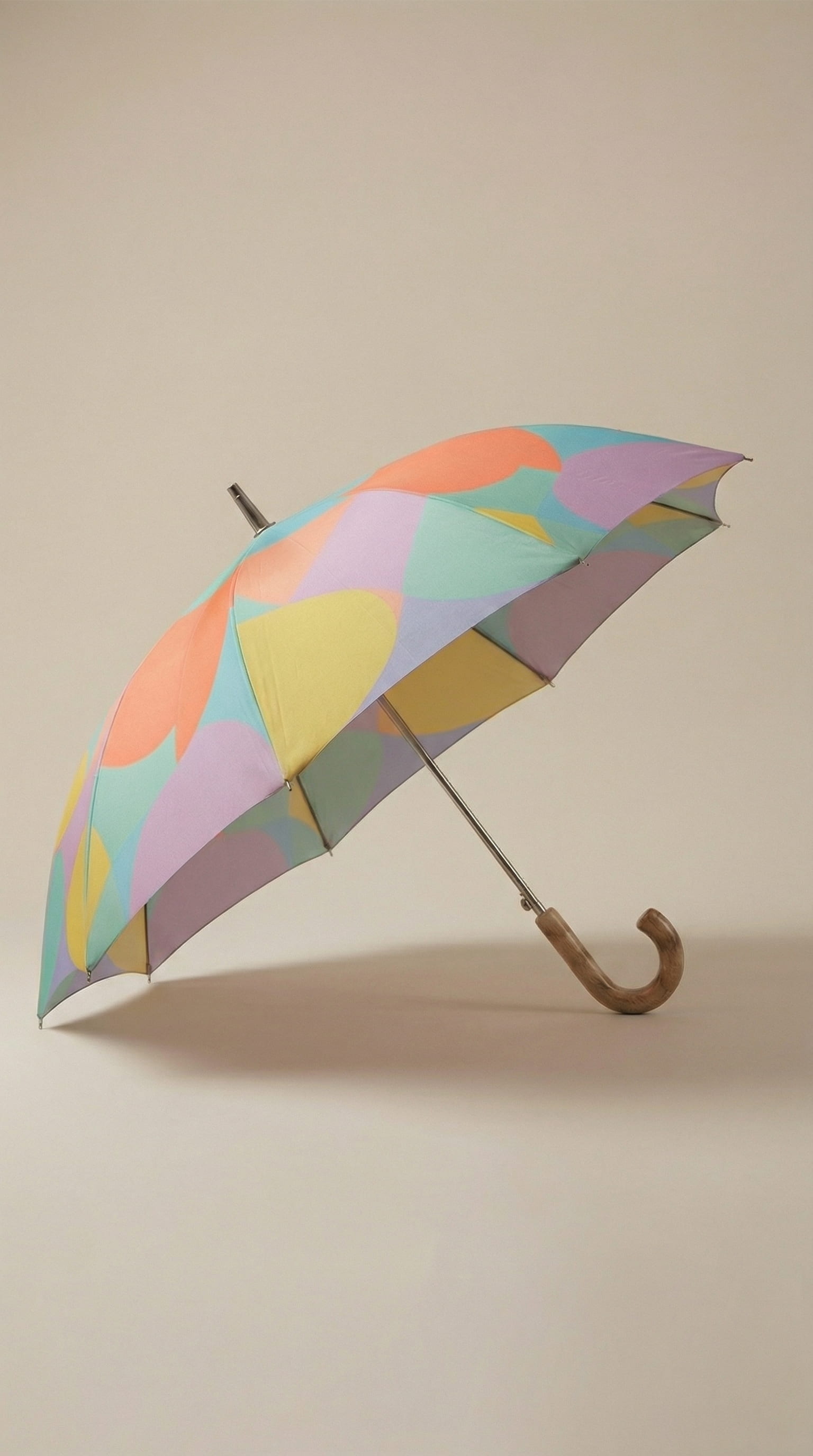
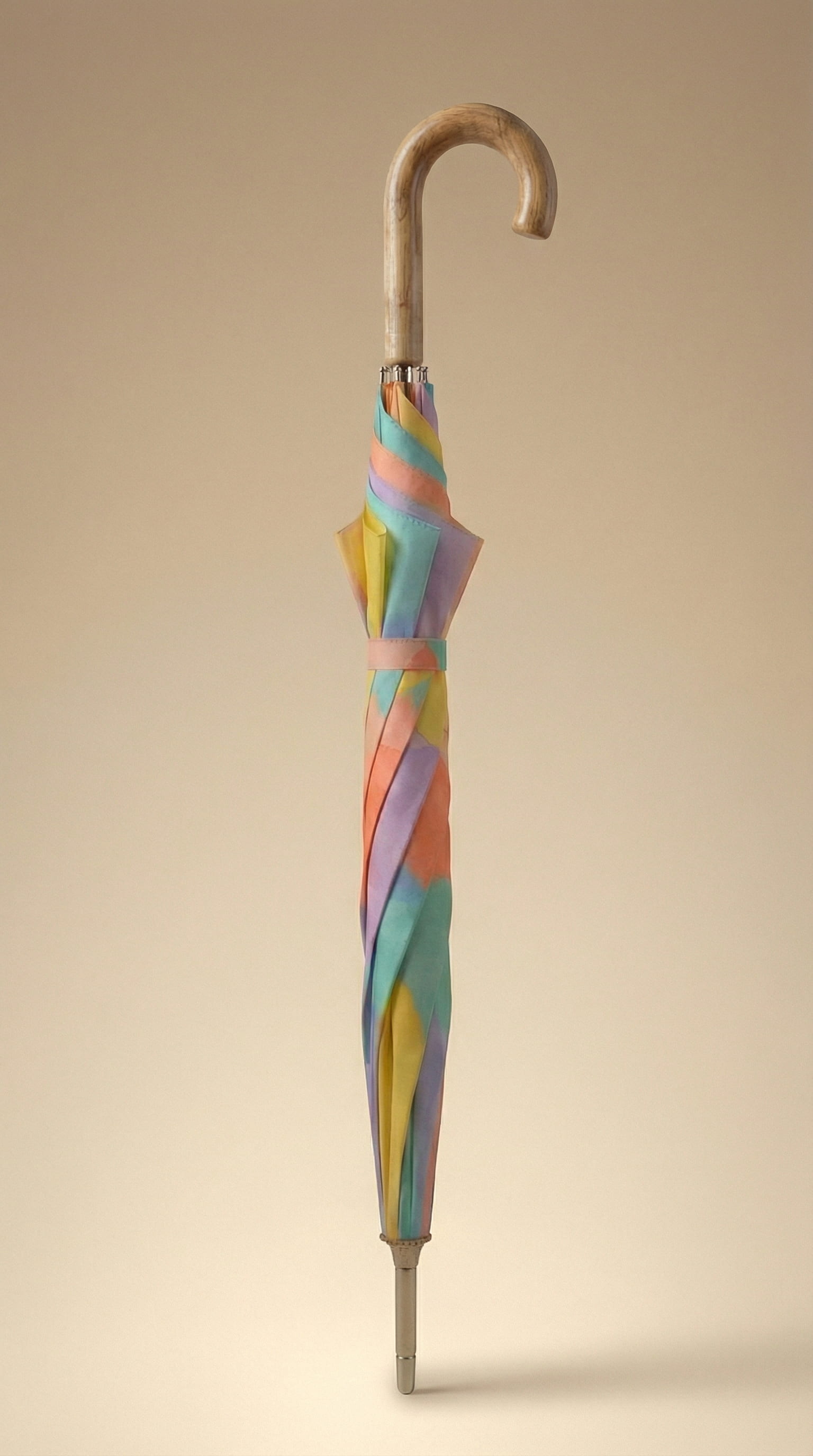
An e-commerce brief with a clear requirement: every frame had to make the product readable while still holding a visual point of view.
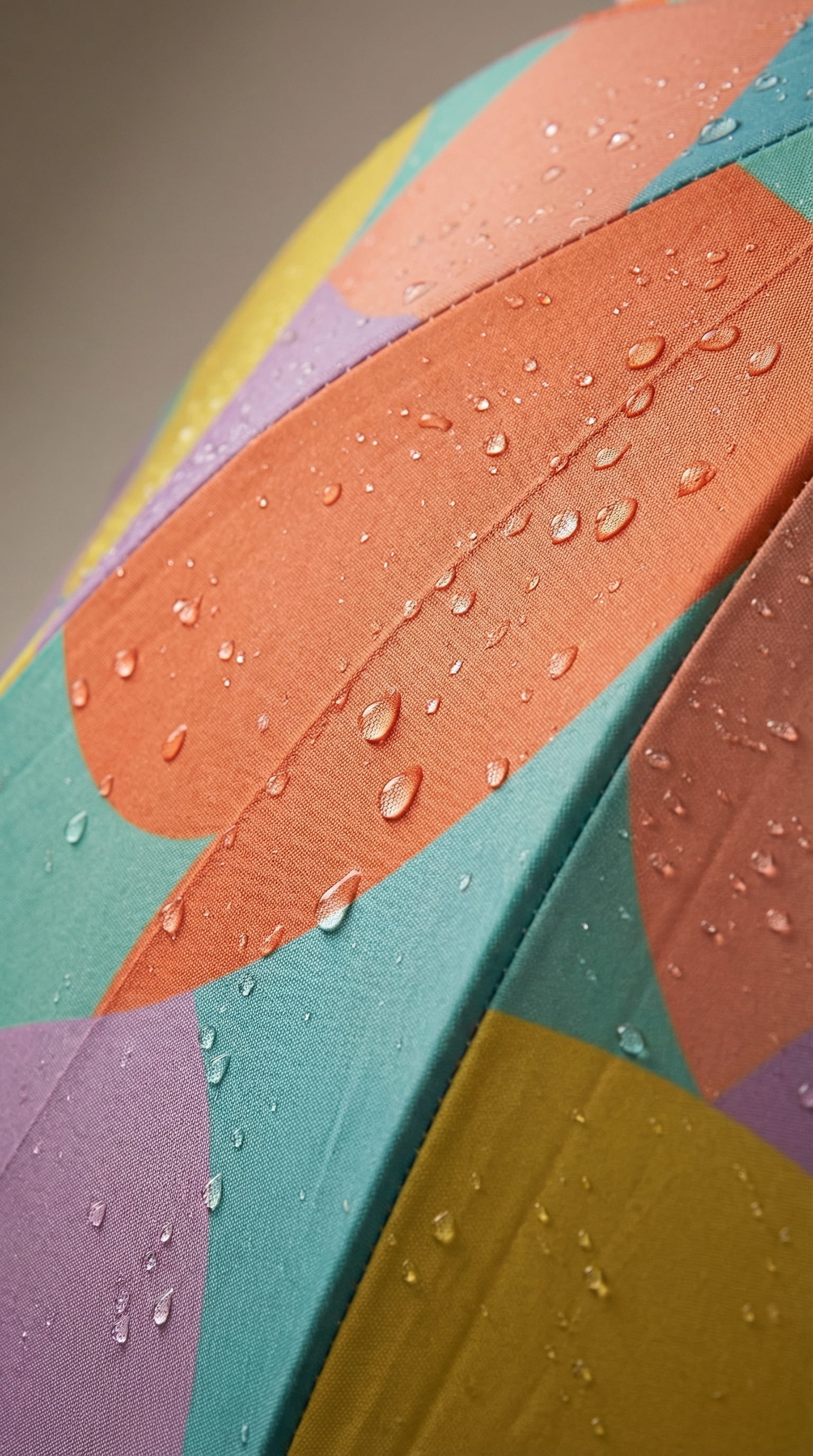
Studio frames were directed with soft natural light on a neutral background, the umbrella open, closed, and in detail. One overhead shot was directed from a high angle looking straight down to show the full print as a flat graphic. The street frame was directed in overcast urban light with the model mid-turn, a wide angle focal length that keeps both figure and architecture readable. The macro was directed to show the water-repellent surface with droplets still sitting on the fabric, communicating function without copy.
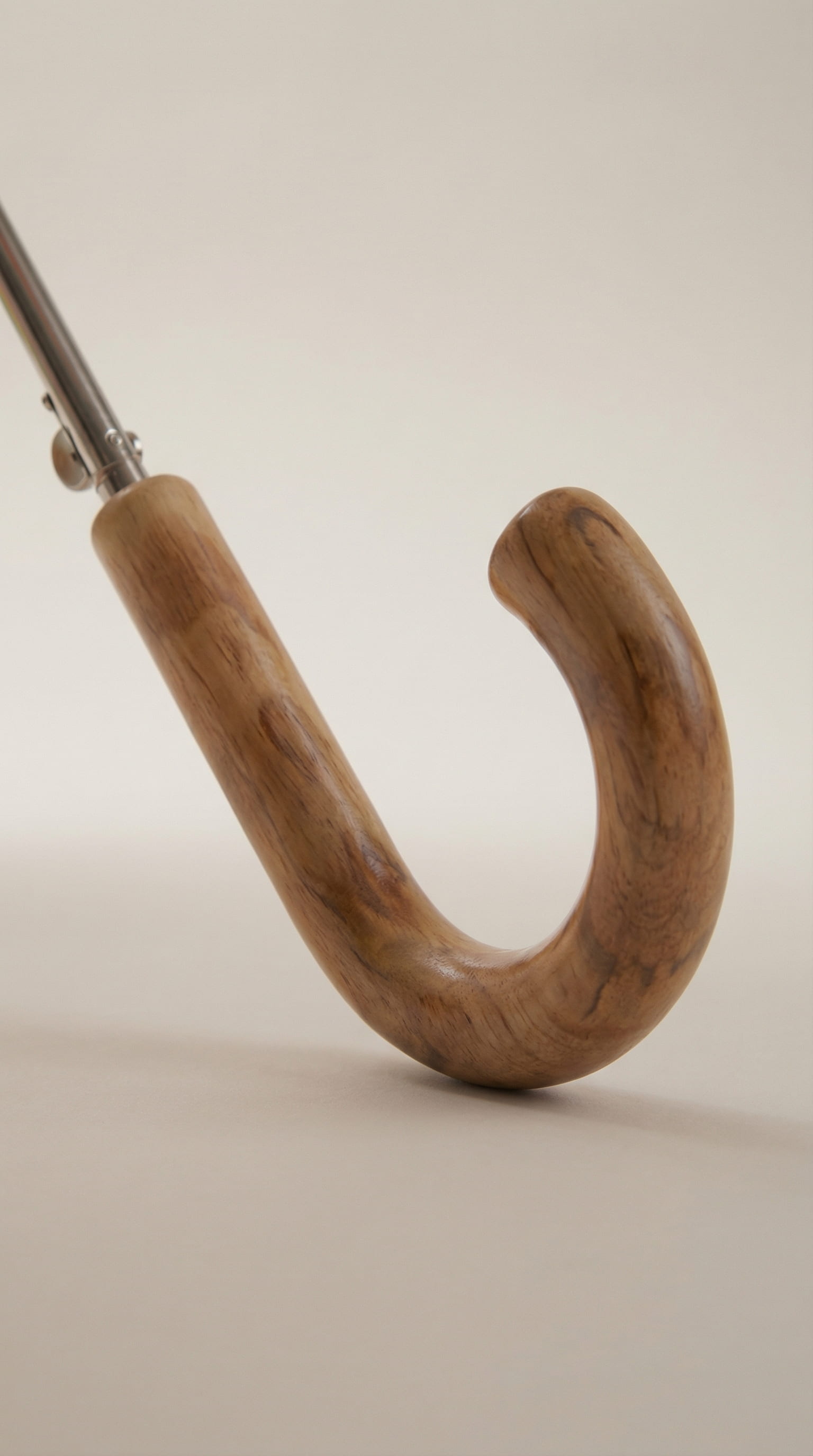
The wooden handle was given its own frame. It was the detail that justified calling this a considered object.
The project begins with a question: what if luxury had always been underground?
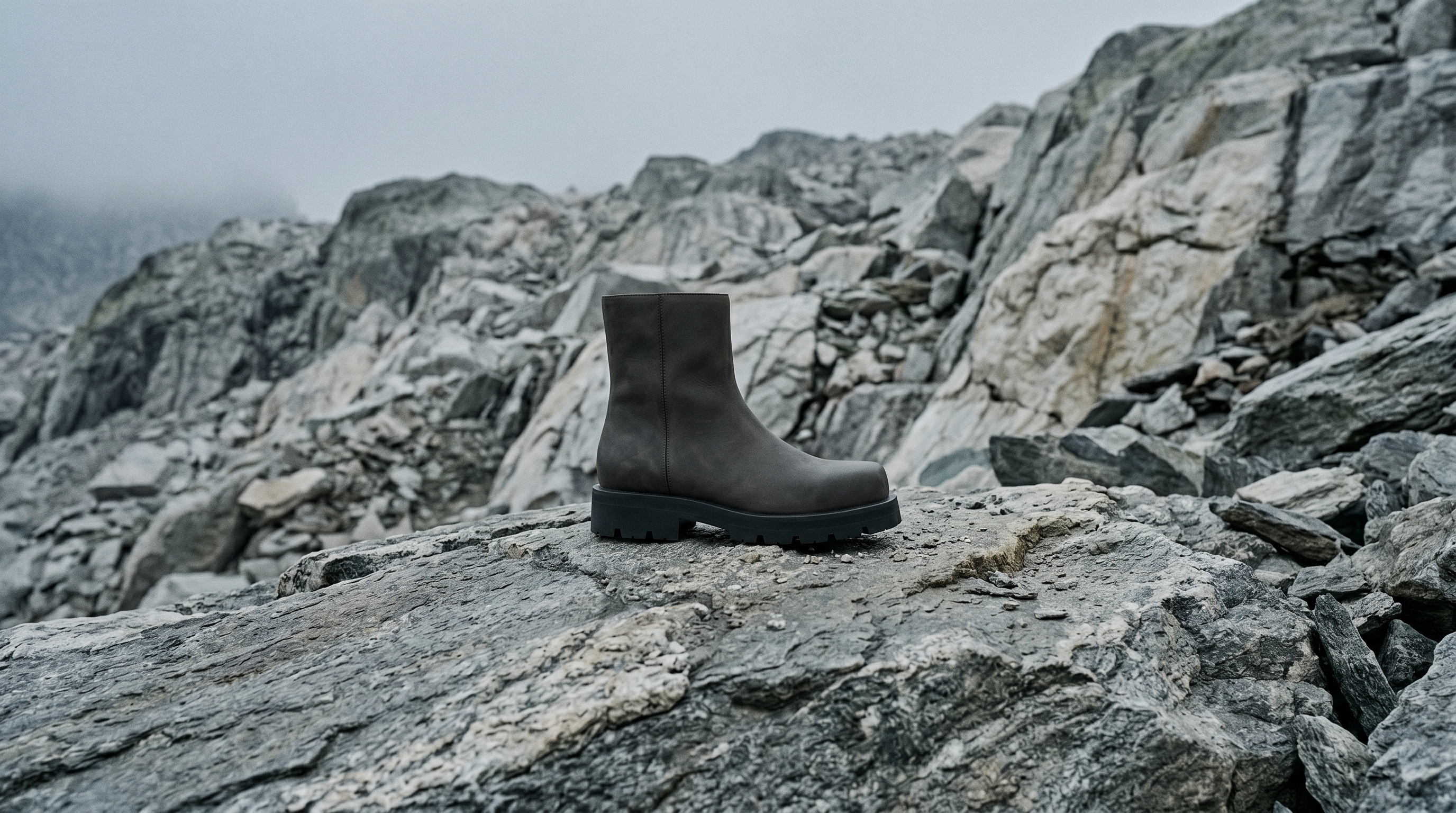
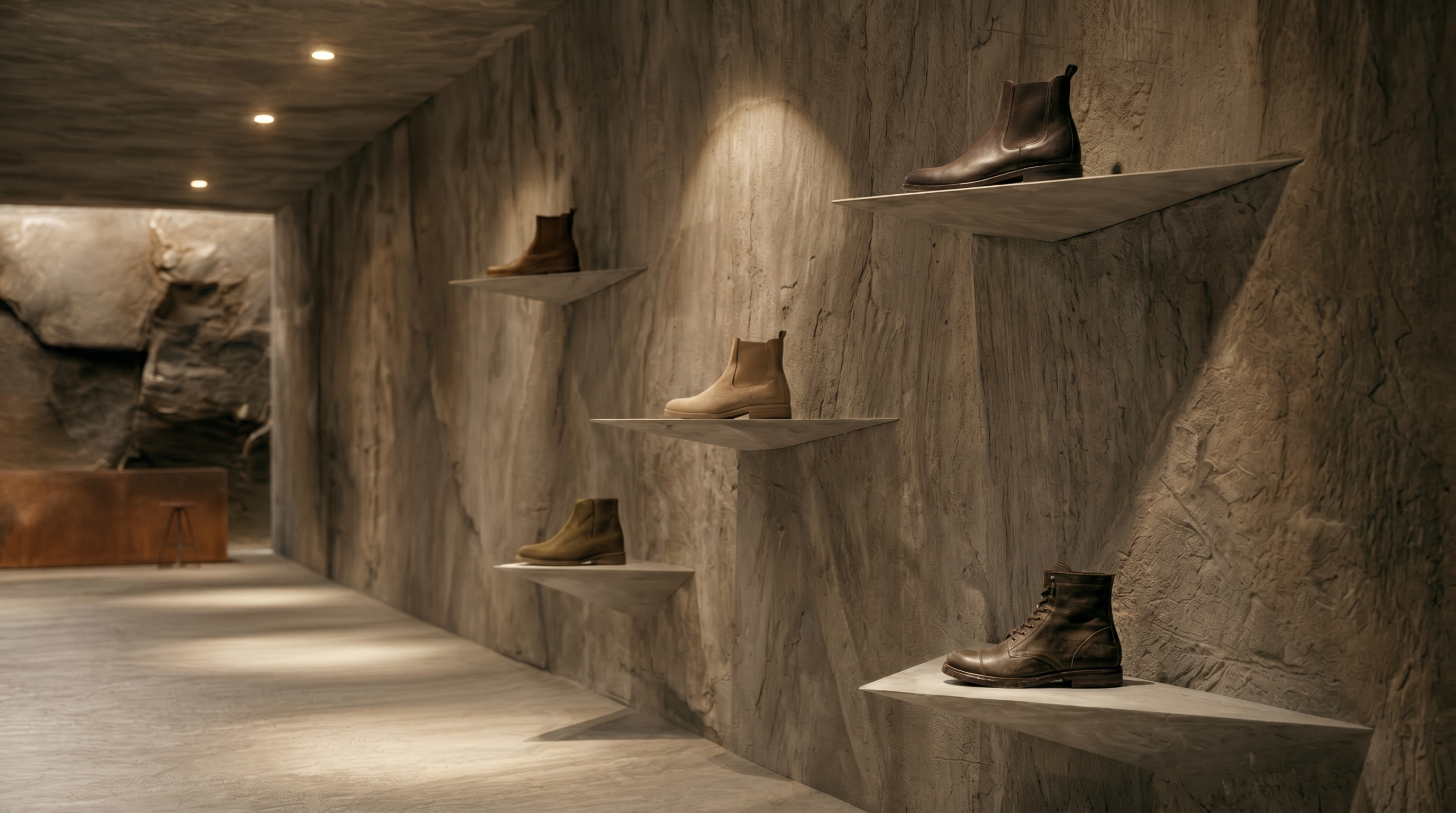
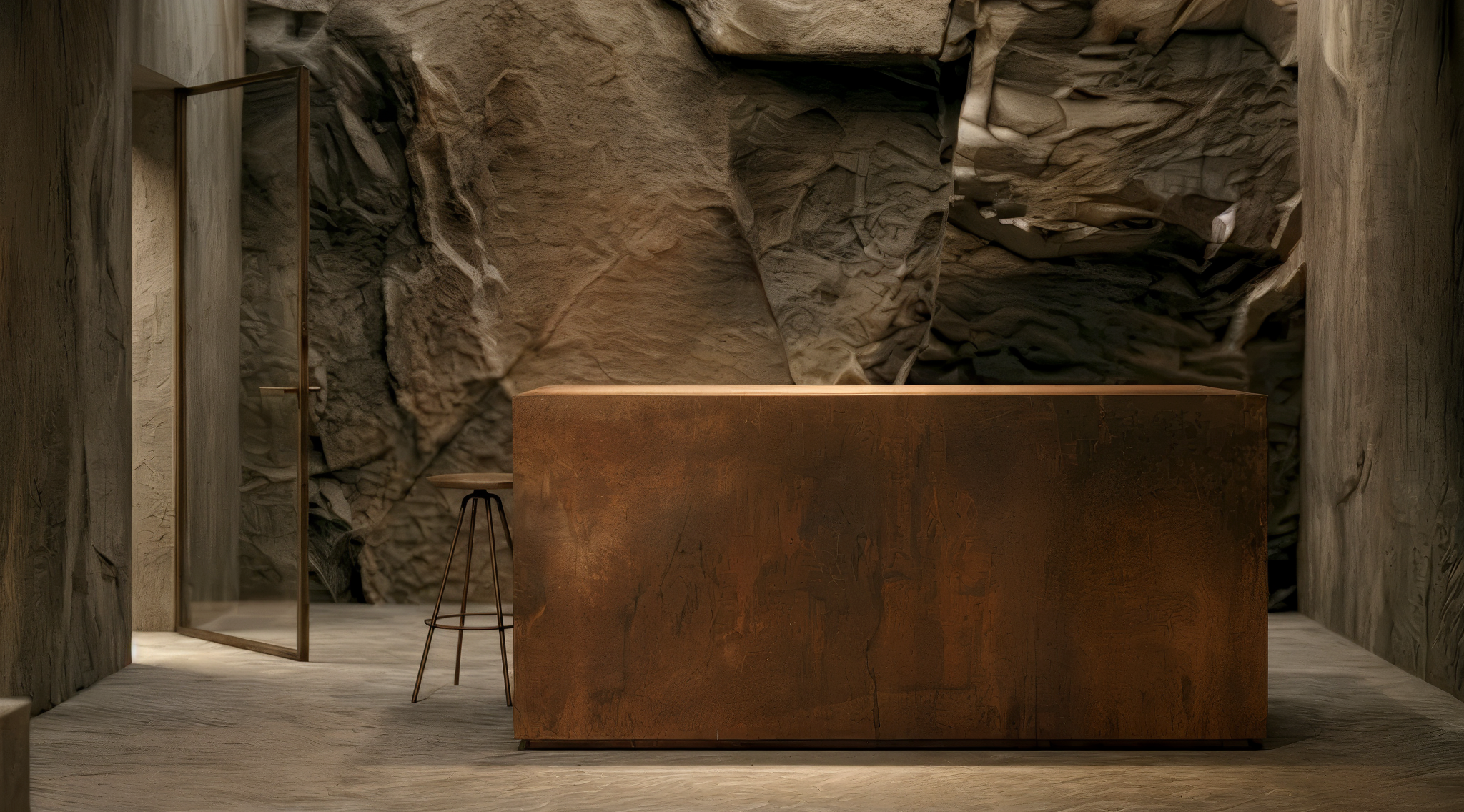
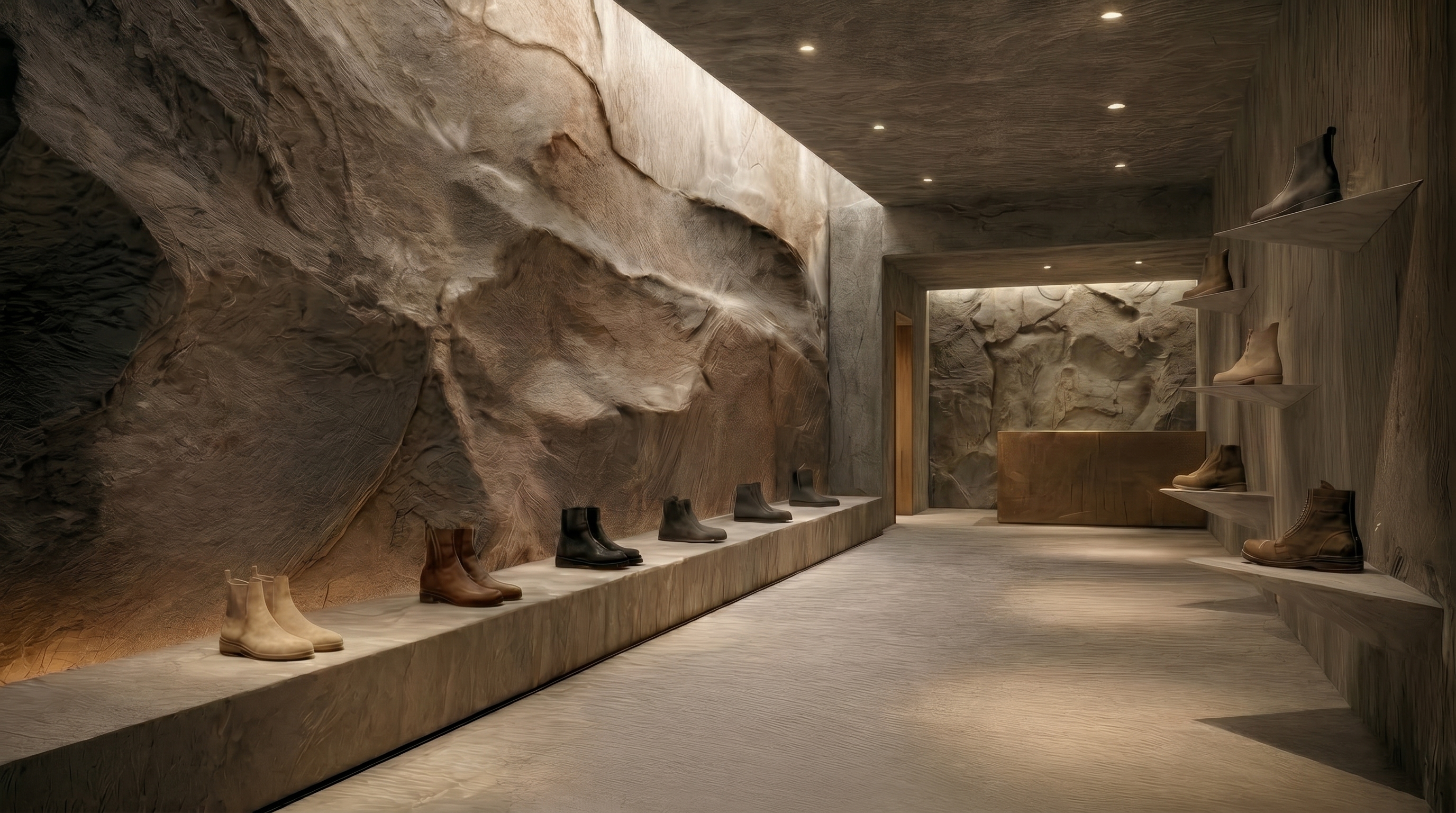
SILT departs from a geological image: a space that reads as excavated, where the material logic of the earth sets the terms of the retail experience. One wall carries the visual weight of raw stone rising from floor to ceiling, lit from below, heavy with accumulated time. The opposite wall is smooth poured concrete, angular shelves flush-mounted at varying heights, each holding a single boot. At the far end, a counter in corten steel, the one material in the space that changes slowly in plain sight.
The stone was chosen to carry an idea about the brand: objects made to last belong in a space that understands duration. Stone accumulates time visibly. It is the material that most honestly represents what the boots are supposed to be.
The rock wall is the conceptual centre of the project, and also its main constructive question. Bringing raw stone into a retail environment at that scale is not viable. The solution points to gunite applied over a steel armature, a technique used in high-end hospitality that produces the same geological surface and depth of shadow without the structural load. The visual result is indistinguishable. The material decision is honest about what it is.
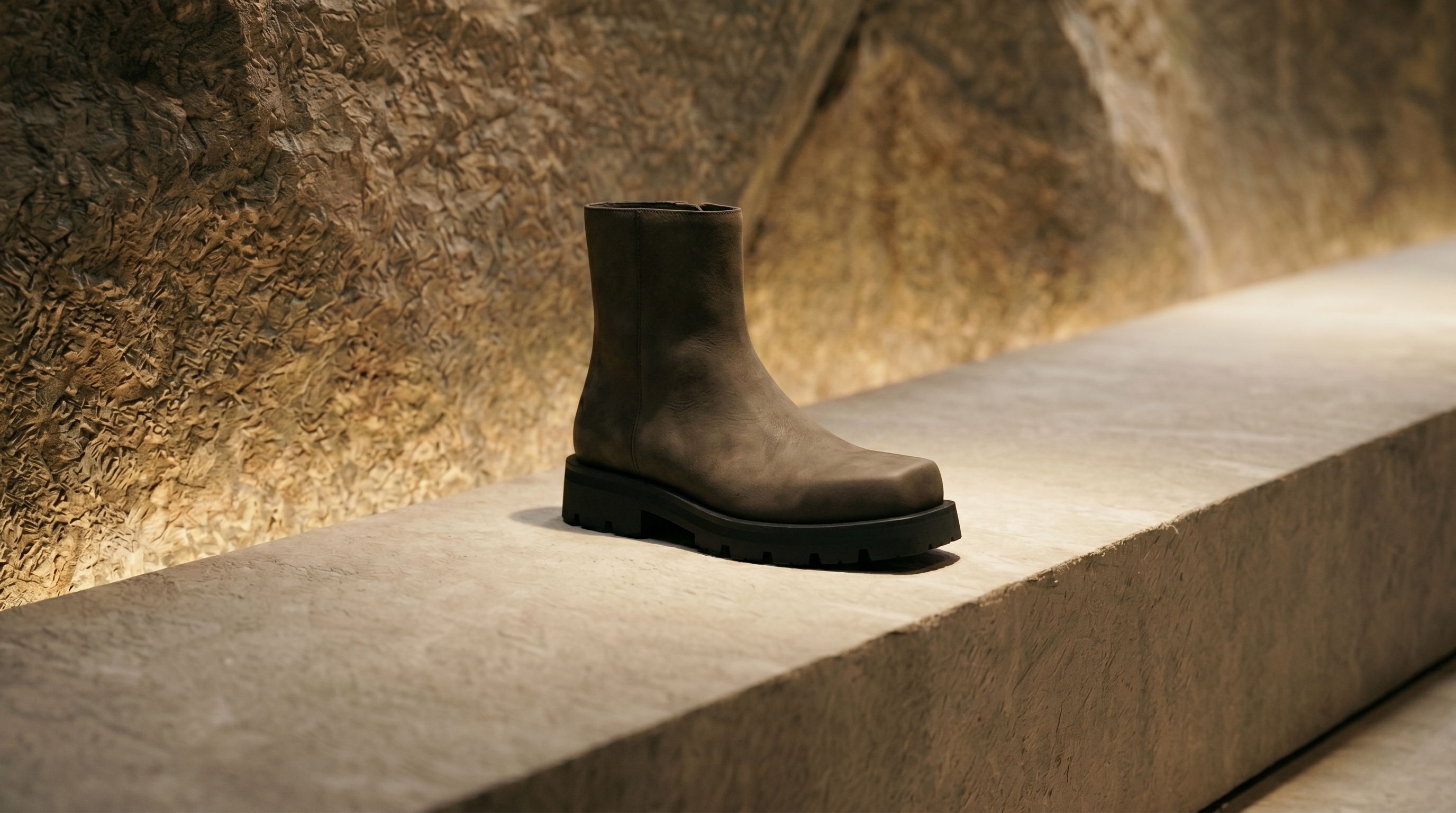
Boots are placed as found objects. Each one rests in silence, separated by space that insists on attention.
The space was designed around the experience of being alone with a single object, long enough to understand why it was made.